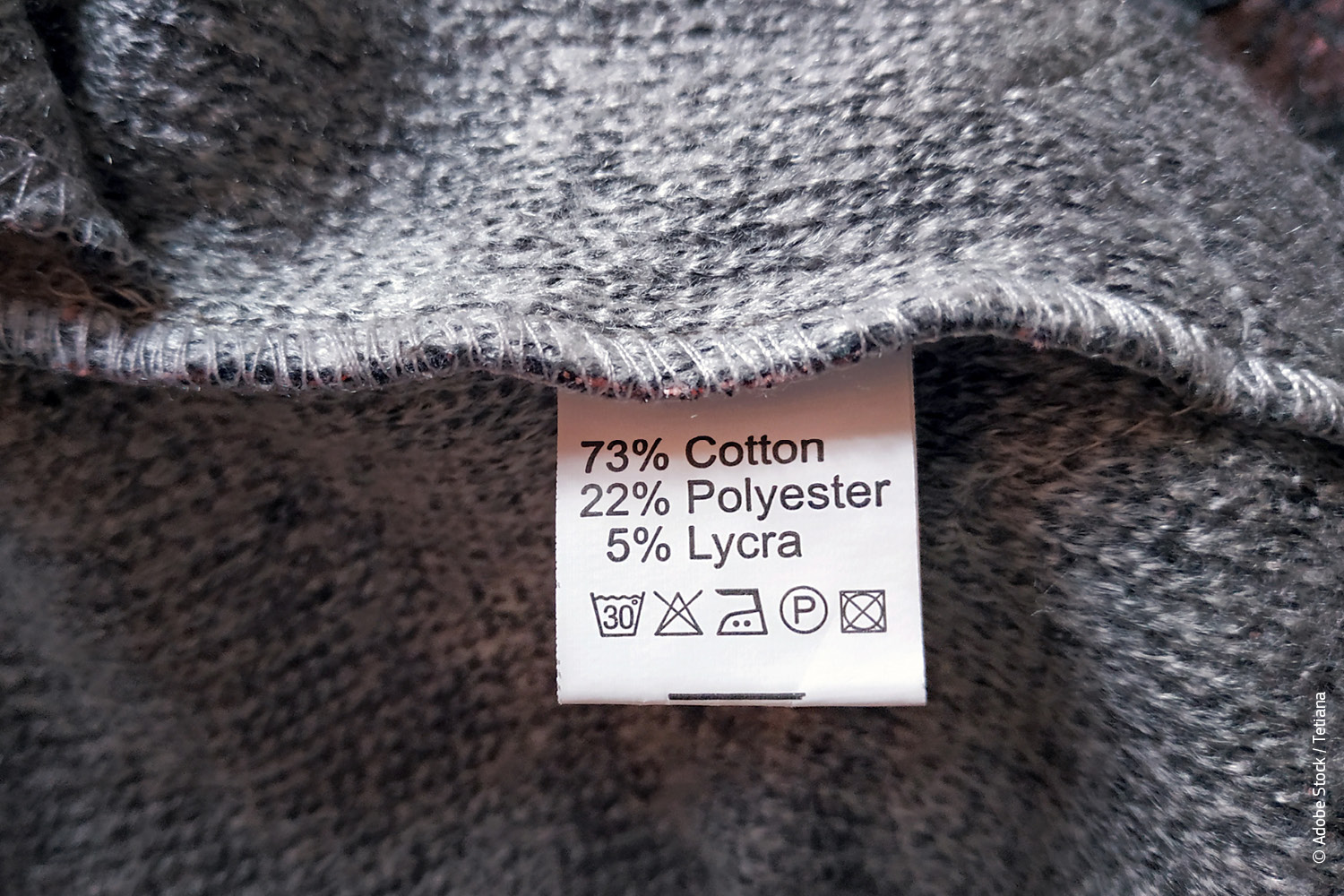
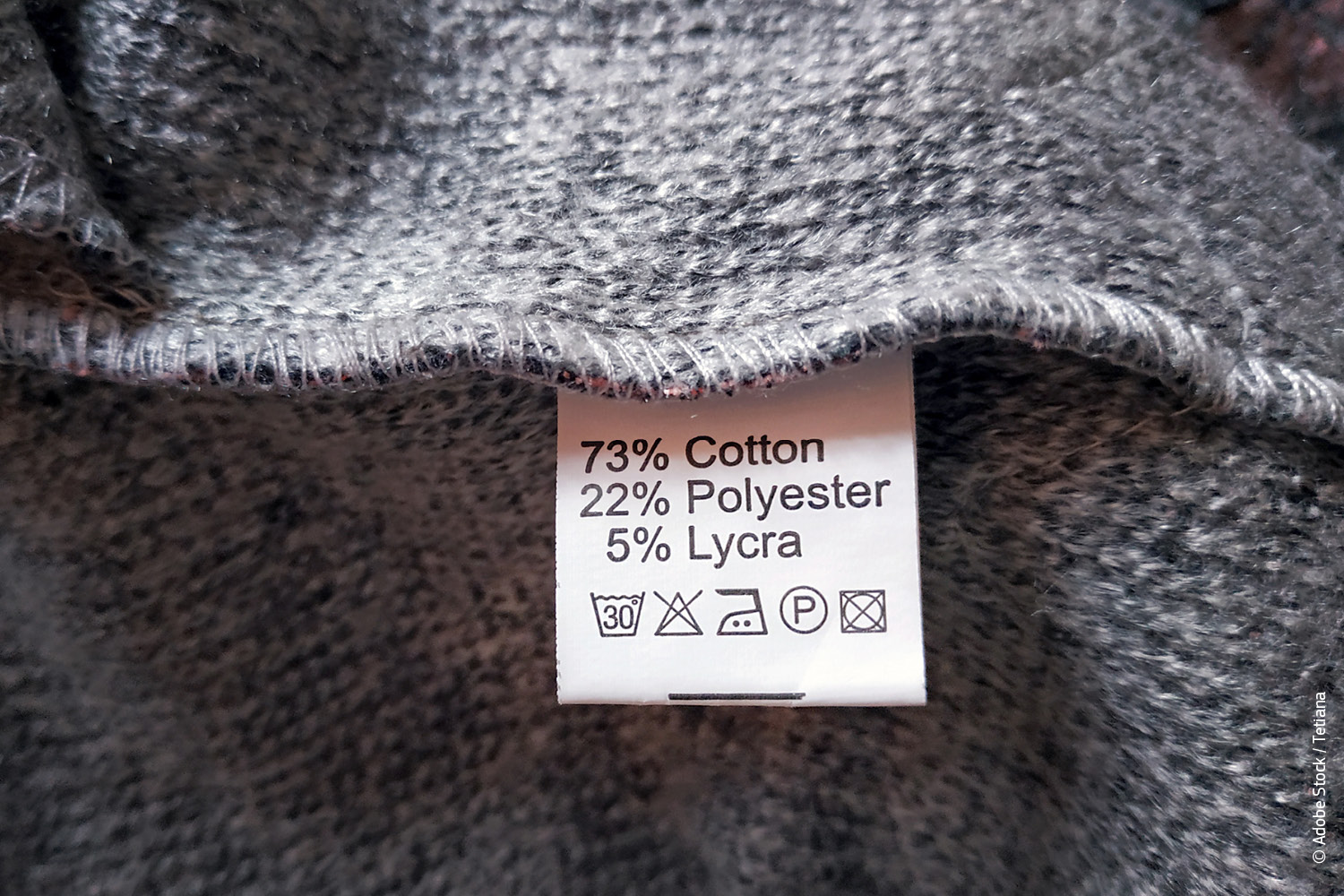
A total of 44 tops, 36 baby clothing items, 15 active wear items, 12 night wear garments, 5 scarves and 20 other types of clothing were sampled. They were made from wool, cotton and fibre blends.
Three main types of non-compliance were found: the fibres were correctly stated on the labels, but the declared percentage did not match actual percentage. Secondly, some products contained different and cheaper fibres than those declared. Finally, on some products, fibres were incorrectly declared or named. These non-compliances are economically harmful and undermine consumer trust.
Mixed findings
Failure rates were highest for scarves, tops and baby clothing, with 80%, 54% and 25% of samples failing respectively.
For the other categories tested, the failure rates were lower: active wear 13%, night wear 16% and other 40%.
Testing for fibre types showed that samples labelled as containing a blend of natural and artificial fibres had the highest failure rate, at 64%, followed by samples labelled as having a blend of natural fibres with a failure rate of 46%. Samples labelled 100 % single natural fibre had a failure rate of 15%. Market surveillance authorities (MSAs) emphasised that these non-compliances pose significant economic risks for consumers, undermine fair competition and make recycling difficult, as this requires accurate fibre identification.
EU-wide sampling
MSAs in Cyprus, Denmark, Finland, Germany, Italy, Lithuania, Malta and Portugal purchased 104 items from shops and 28 online.
Performed at an accredited laboratory in Italy, the testing found that the failure rate was 46% for online purchases (which includes retailers’ own websites) and 36% for items bought in physical stores.
Many products, especially those imported from outside the EU/EFTA, lacked basic manufacturer information, which makes enforcement or recalls difficult.
Corrective action
MSAs ordered that sales of 18 products be stopped. Manufacturers of two products were instructed to take corrective measures, while another two products had to be relabelled. For three products, the economic operators were told to mark their items with the appropriate warnings. As of early March 2026, measures are ongoing for 24 products.
A total of 41 products were registered in the Information and Communication System for Market Surveillance, the EU platform for market-surveillance authorities to share product test results and non-compliance findings to coordinate enforcement and keep unsafe non-food products off the market.
The high rate of failure suggests that mislabelling is widespread, underlining the importance of continued testing and a need to make the industry aware of its labelling obligations When buying clothing, consumers should be cautious of very low prices, or deals that seem too good to be true, and to prefer products where the manufacturer’s name, address or website is mentioned on the label. This ensures accountability and traceability.
Importers, distributors and retailers should check that labels and markings are on all items. Both businesses and MSAs must ensure rigorous testing of final garments and fabric rolls.
“Consumers and businesses need to know that the labels on the garments they buy give a true picture of the fibre composition of those garments. Market surveillance campaigns help ensure consumers get what they pay for and protect businesses from unfair competition,” said DG GROW Policy Officer, Vanessa Capurso.
The testing was done during the Joint Actions on Compliance of Products (JACOP) 2025 inspection campaign. Clothing was one of 11 product categories tested.
For more information, please contact jacop2025@esn.eu