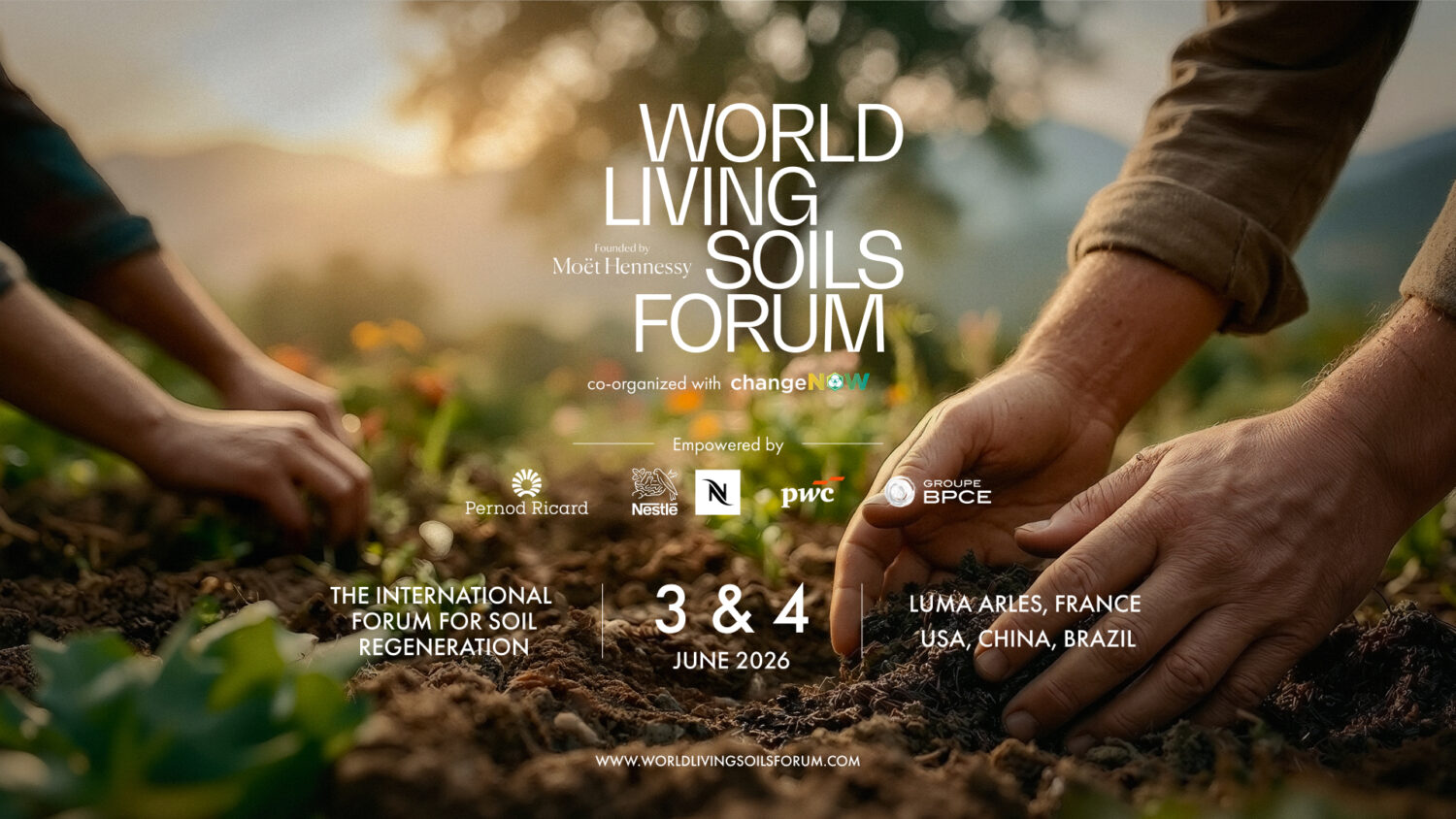
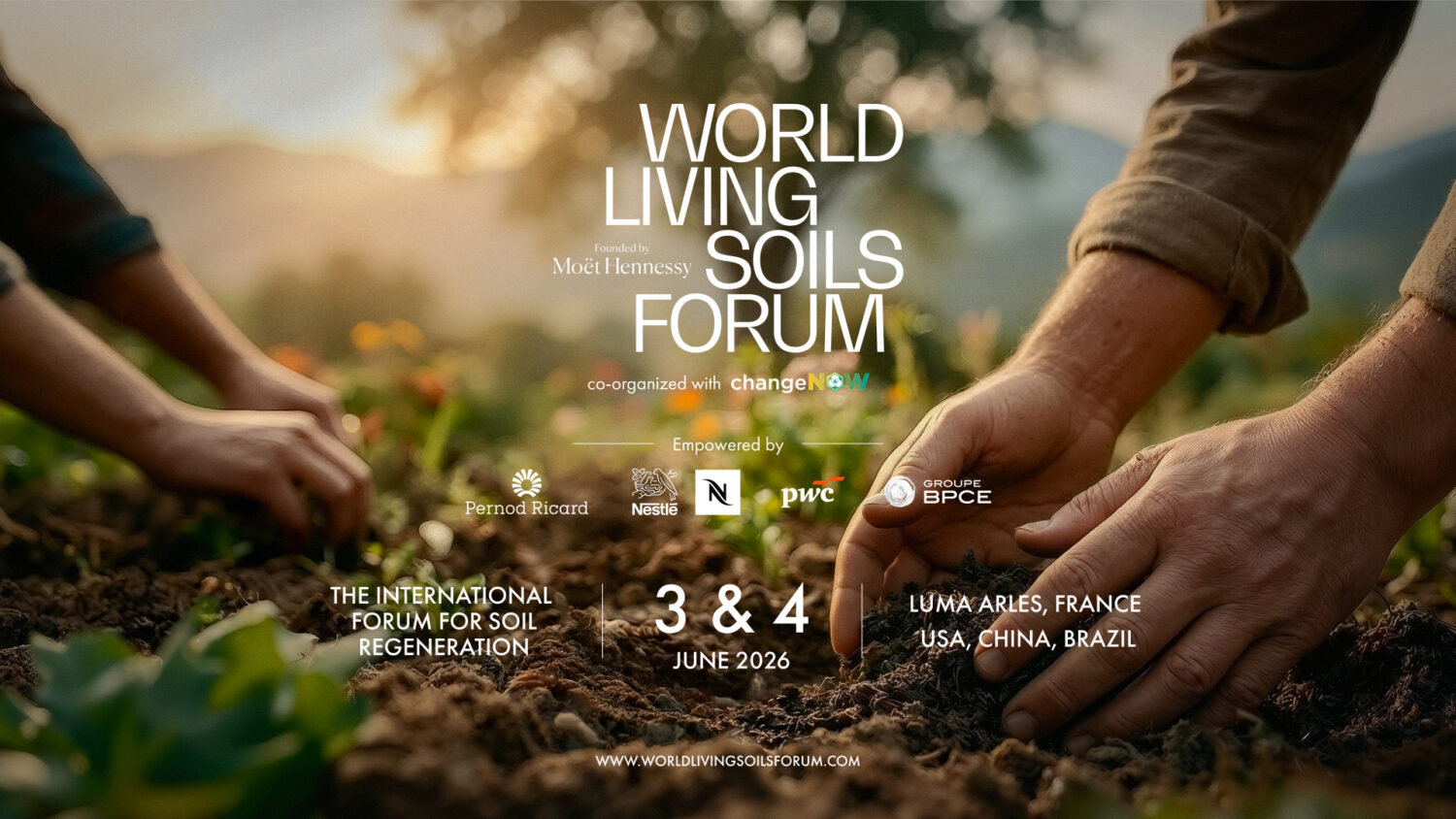
A rich and ambitious program to amplify impact
The WLSF program was co-created by its external Advisory Board, composed of fifteen experts from diverse backgrounds, and expanded in 2026 to include the four partner companies. Together, they defined the event's editorial direction around four major themes deployed across nearly 80 sessions with 180 internationally renowned speakers.The program is structured around 4 thematic tracks:
1. System: Finance, Policies & Education.
- Where do we stand on public policies for adaptation and territorial preservation?
- Are European and national regulatory frameworks ambitious enough to address the emergency of soil preservation?
- What kind of governance should be encouraged at the global level?
- Which financing mechanisms can support the transition, and how can they be effectively deployed?
- How can soil health and regenerative practices be placed at the heart of training for a new generation of farmers and decision makers?
2. Regenerative Practices: Measurable Impacts and Scaling Up.
- How can solutions in agricultural practices be replicated at scale? And how can their benefits be measured?
- Which stakeholders and tools are currently able to assess these innovations and their potential for duplication?
- How can the positive impact of these new models for farmers, communities, local economies, and territorial attractiveness be shown?
- How can the benefits be better communicated and valued by citizens and consumers?
3. Nature: Water, Biodiversity, Territorial Focus, De-Artificialization of Soils.
- The water cycle is deeply connected to soil health—what approaches should be implemented to ensure both the quantity and quality of this resource over the long term?
- How can new adaptation strategies, evolving agricultural practices, and urban planning regulations better integrate interactions with natural ecosystems?
- From cultivated soils to forest soils and urban soils, what approaches can strengthen territorial resilience and deliver socio-economic benefits?
- From soils to subsoils, what management strategies are needed to limit the impact of human activities?
4. Society, Art, Culture, and Gastronomy: Raising Awareness and Mobilizing for Living Soils.
- How can the essential issue of living soils and the emergency of their preservation be brought to the attention of the general public?
- Which levers for awareness and mobilization can be activated?
- How can we better connect soil health to quality of life?
- What roles can media, art and culture, and gastronomy play in engaging citizens?
- How can soils—this shared common good—be made more desirable and attractive for all stakeholders, from farmers and supply chains to retailers, local authorities, and consumers?
Furthermore, the Forum continues to highlight innovation and "solutions" with the presence of 16 startups offering high-impact innovations, one of which will be recognized with a jury's "Coup de Cœur" (Special Recognition) award.
Its international dimension is strengthened through three simultaneous live broadcasts organized from the United States (New York), China (Shanghai), and Brazil (São Paulo), allowing for global audience engagement and the addressing of local issues.
This new edition, also enhanced with new practical formats (case studies, calls for solutions, calls to invest, workshops...), aims to stimulate operational strategies that are directly applicable and deployable for soil regeneration. More than ever, the WLSF positions itself as an indispensable crossroads for mobilizing collective intelligence and transforming current challenges into opportunities for a more sustainable future for our planet's soils.
For more information:
The complete list of sessions and speakers is available at www.worldlivingsoilsforum.com/fr/.
Video content and a detailed report will be uploaded and accessible to all after the event.