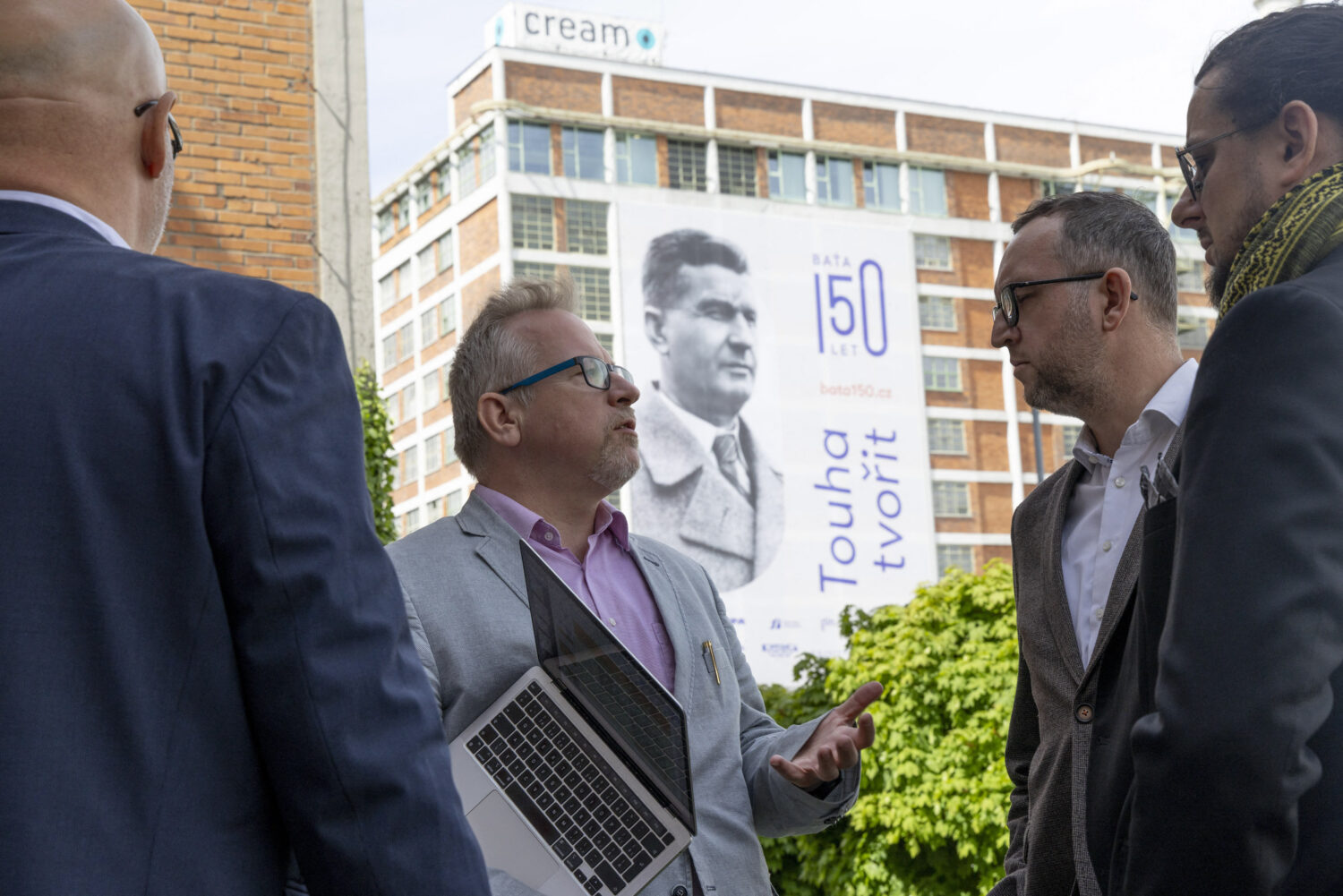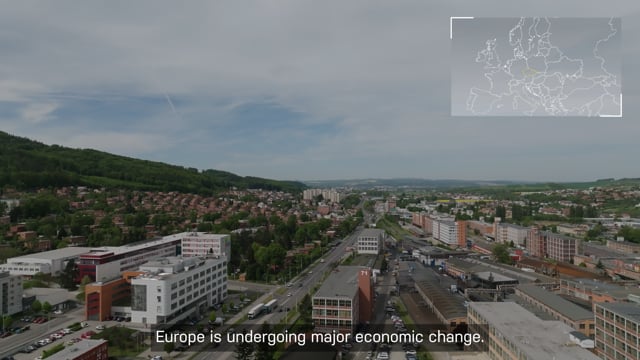
ZLÍN, Czech Republic — The giant red-brick factory blocks that once made Zlín one of Europe’s great industrial showpieces still stand. But the region they define is now asking a harder question: can a place built on the genius of one man reinvent itself for a century that man never saw?
Zlínský kraj enters the 150th anniversary of the birth of Tomáš Baťa — the cobbler’s son who turned a small Moravian town into a global footwear empire — as one of the Czech Republic’s most productive manufacturing zones. Mechanical engineering, defence technology, robotics and semiconductors have all taken root here.
Yet the numbers tell a more uncomfortable story. Research and development spending lags behind the national average. Wages remain below those in Prague or Brno. And the young keep leaving.
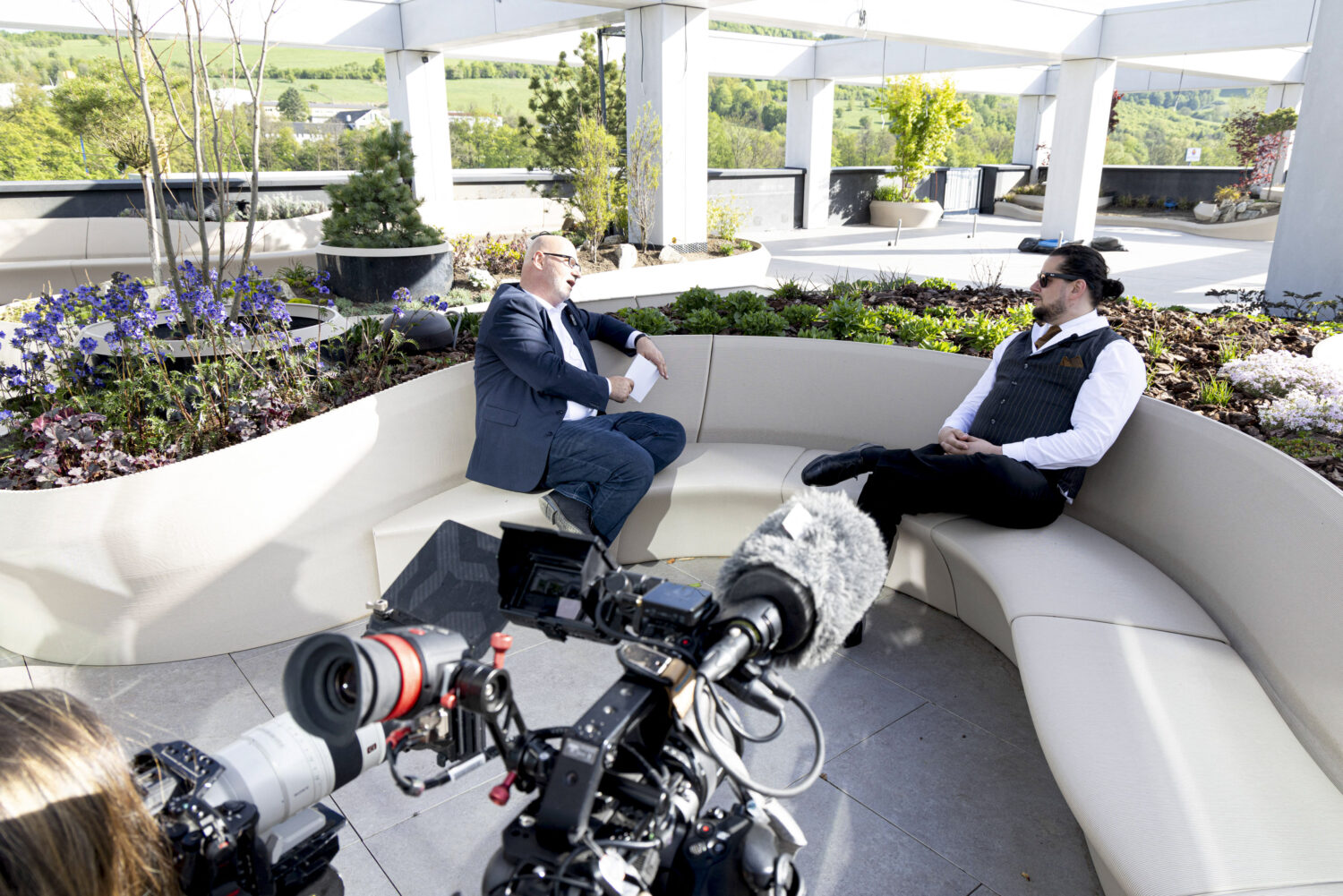
That paradox — industrial muscle without an innovation ecosystem to match — was the thread running through a series of interviews conducted by Agence France-Presse and SITA with regional officials, university leaders, entrepreneurs and students.
THE NOSTALGIA TRAP
Simon Anholt, the British expert who created the Nation Brands Index and has tracked country reputations for more than two decades, is familiar with the Baťa story. He wrote about it in his book Brand New Justice as an example of a global brand emerging from what was then an unlikely location.
But familiarity with the legend does not make him sanguine about how regions use it. The key question, he says, is whether the thread of innovation from Baťa’s era to the present day has ever been broken.
“If the bloodline of innovation is continuous — from Baťa to the present day with no big gaps — then it can be a powerful asset. But if there is a break, if people are looking back 80 or 100 years and saying we are not like that anymore, then it can become problematic. It can create a sense of inferiority, a narrative of loss. And that is not a productive or forward-looking mindset,” he said.
The warning has particular relevance for Zlín, where Baťa’s name and principles are ubiquitous — on street signs, in university lecture halls, in the rhetoric of regional development plans. Whether that amounts to inspiration or burden is the question the region has not yet fully answered.
Anholt draws a careful distinction between using the legacy internally and projecting it abroad.
“When you are amongst people from the region, it is a story which, if you are clever about it, you can use in quite an inspiring way. But I would suggest being cautious about telling it as an international story to celebrate the innovativeness of the region, because you can find yourself slipping into that narrative of ‘we’ve lost it’,” he said.
PUBLIC MONEY IS NOT ENOUGH
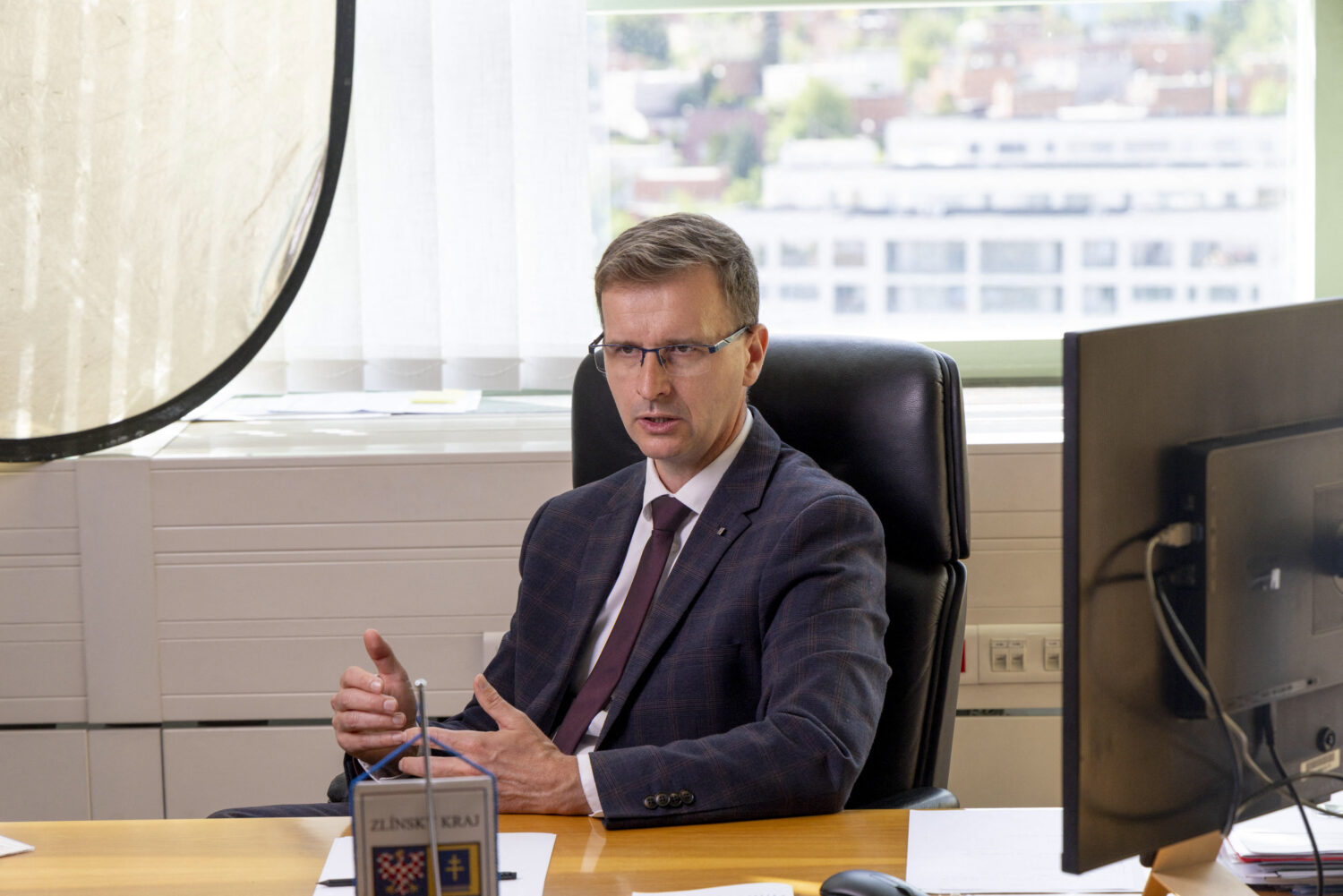
Radim Holiš, the governor of Zlínský kraj, is candid about the limits of what public investment alone can achieve.“Without private-sector investment, we simply will not move forward,” he said, pointing to the development of Tomas Bata University (UTB) and the need to create an environment where young people can pursue their own projects without leaving the region.
UTB rector Milan Adámek identifies a structural problem that goes deeper than funding. Only around 12 percent of primary school pupils today opt for technical subjects, he said. The region also lacks a space where research and real-world manufacturing can properly interface.
THE TESTBED IDEA
One word came up repeatedly during the reporting: testbed.In the nearby town of Vizovice, a family-owned company called UNICO MODULAR, led by Lukáš Rudy, is building an industrial testbed financed entirely from private resources. The concept is neither a co-working space nor an office complex. The aim is a facility where companies, universities and developers can test technologies under conditions close to those of actual production.
“My dream was to transform the region so that one day my children would want to stay here,” Rudy said.
He describes the project not as a short-term investment but as a generational undertaking. Dana Rudyová of the Rudy Family Foundation shares that long horizon.
“It matters to us that the company is still functioning in ten or twenty years. We do not want to build it to a certain size and then sell it off,” she said.
THE MISSING LINK
Several respondents said the region’s problem is not a shortage of institutions or companies but an inability to connect them into a functioning ecosystem.“Zlínský kraj does not lack players. It lacks the collective drive to score,” said Petr Novák, an associate professor at UTB.
Zdenko Čambál, dean of the Faculty of Materials Science and Technology at the Slovak University of Technology, drew the same diagnosis for Central Europe as a whole: the region does not suffer from a shortage of strategies but from a weak ability to translate research into real production.
“Testbeds are something that can generate unique value in our environment,” he said.
Vladimír Riška of the Horizon Europe programme added a further caution: infrastructure alone is not sufficient.
“It must be connected to international networks, partners and research projects. Otherwise we risk having buildings without content,” he warned.
DEEDS, NOT SLOGANS
Anholt’s broader research offers a pointed lesson for any region tempted to market its way to a better reputation. After 21 years of tracking country images, he is unequivocal about what does and does not work.“The things that make you rich are not the things that make you famous. The things that make you famous are the things that make people grateful,” he said. “As an economic strategy, let’s be more innovative — absolutely 100 percent. But as a brand strategy, let’s be perceived as innovative — no, that doesn’t work.”
His prescription for regions that do want to build a stronger profile rests on three elements he has applied in every context: strategy, substance and symbolic actions.
“Strategy means knowing exactly how you are perceived today by your audience. Substance means that if you want to be perceived in a certain way, you actually have to behave accordingly — if you want to be admired, be admirable. And symbolic actions are the occasional, attention-grabbing initiatives that communicate what you are doing in a compelling way. Not public relations stunts — crazy relevant things that speak for themselves,” he said. “Forget marketing, forget logos, forget slogans — they are a waste of money.”
THE YOUNG DECIDE
The students interviewed during the reporting described Zlín as a safe, calm city — and made clear that their decision to stay hinges on one thing above all.“If there are good jobs here, we will stay” was the answer heard most often.
That, in the end, may be the region’s defining challenge. Not how to celebrate Baťa’s legacy with suitable dignity. But whether it can build the conditions for the next generation to choose to remain.
The first major test will come in October 2026, when the UNICO Innovation Hub in Vizovice is due to be unveiled to the public. The keynote speaker at the inauguration conference will be Simon Anholt.
Not as someone there to confirm the region’s success — but as the author of a question that much of Central Europe is now asking itself: can regions with an industrial past still create something that will matter to the future?