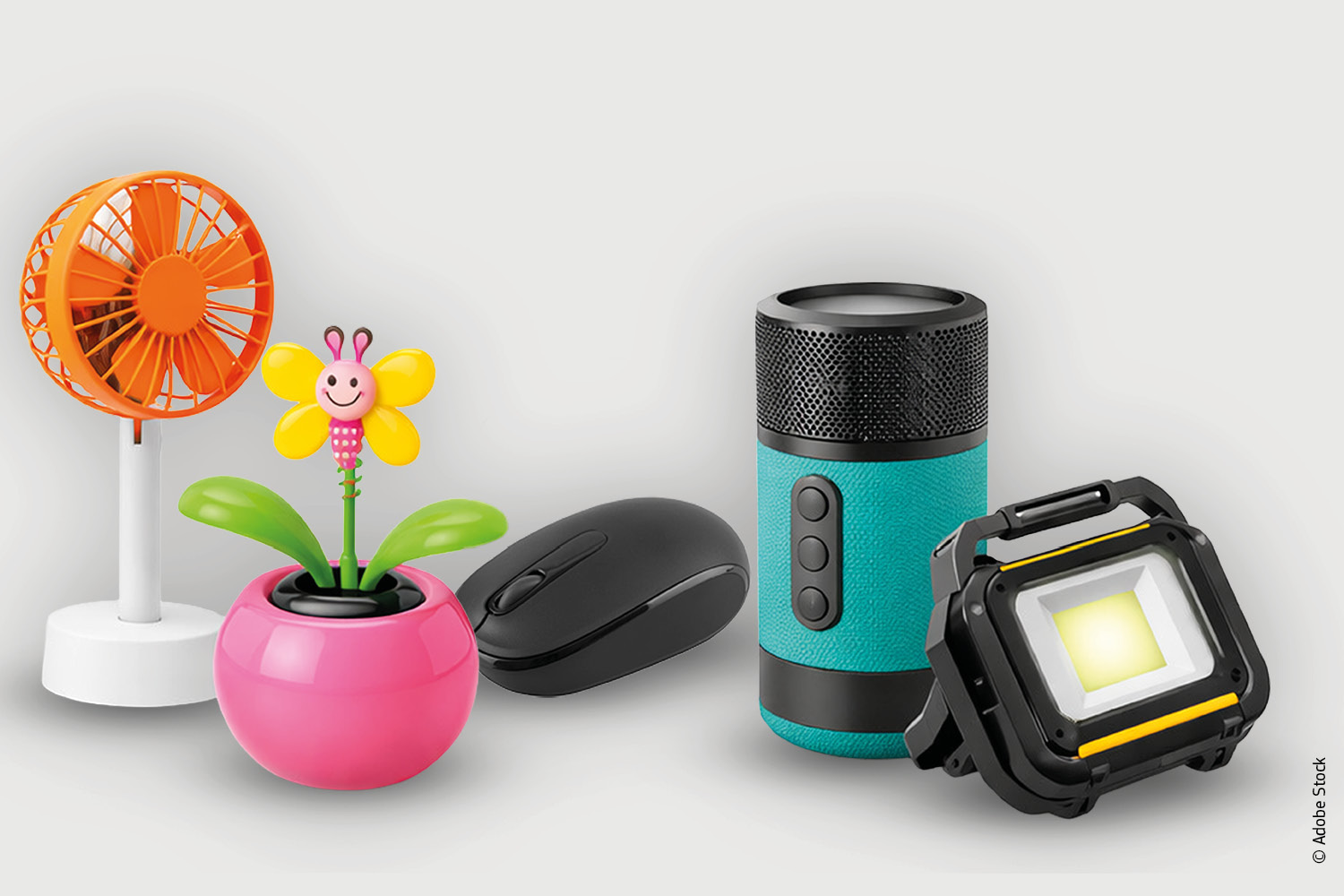
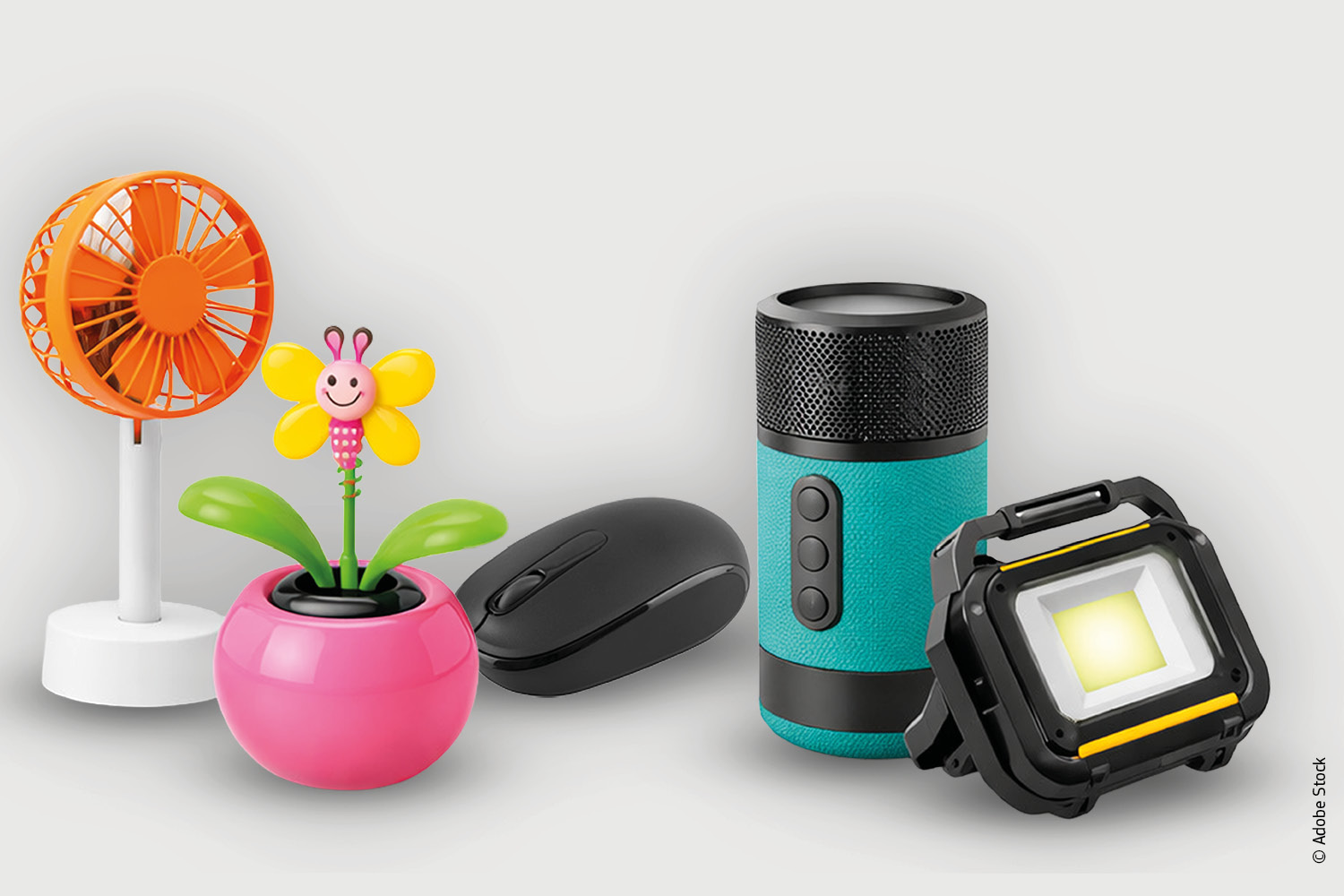
Market surveillance authorities (MSAs) selected 107 cheap, commonly used electronic devices with USB connectors or solar panels such as fans, speakers, smart watches, torches and garden lights for testing. Also examined were 32 kitchen appliances like toasters, waffle makers, mixers, citrus presses and electric saltshakers, and 22 personal care items such as hair dryers, hot brushes, shavers, trimmers and massage tools. The remaining products fell into other categories.
They were tested for levels of heavy metals (lead, cadmium, mercury and hexavalent chromium), brominated flame retardants (PBB and PBDE) and plasticisers (phthalates: DEHP, BBP, DBP and DIBP), the use of which are restricted by the EU’s Restriction of Hazardous Substances (RoHS) directive.
Elevated levels of lead (and cadmium) were most frequently detected in solder points (82 samples failed). Plasticisers were prevalent in the insulation and/or sleeves of USB cables, power cords and plugs, specifically in soft PVC (51 samples failed). Brominated flame retardants were found in the hard plastic parts of five samples, and hexavalent chromium was found in metal screws and the iridescent metal components of three samples tested.
Online purchases had a higher failure rate: 49 did not meet requirements, compared to 37 sampled from shops.
EU-wide sampling
In all, 104 samples were sourced from physical stores and 69 online, for an average price of EUR 10
MSAs from 13 countries sourced the gadgets in stores and online: Belgium, Estonia, Finland, Germany, Ireland, Latvia, Luxembourg, the Netherlands, Norway, Poland, Portugal, Slovenia and Sweden.
Missing documentation and CE marking
Separately, the products were checked for the required markings and documentation. Problems were found in 41 (24 %) of the products, including missing, insufficiently visible or illegible CE marking or one that could be easily erased. Some shortcomings concerned the absence of details for an EU-based point of contact.
When the laboratory tests and checks of markings are combined, a total of 91 products (53 %) out of 173 failed.
MSAs notified businesses about the failures and reported several of these products on the Safety Gate platform, the EU’s rapid alert system for dangerous non-food products.
A range of actions were taken for the 91 non-compliant products. The most common ones were withdrawing them from the market before they reach consumers and banning their sale.
Recommendations
MSAs advise consumers buying electronic products to consult Safety Gate to check that their intended purchase is not listed as harmful.
In addition, MSAs recommend that shoppers avoid suspiciously cheap products. Such products are unlikely to meet EU standards and are potentially environmentally harmful and hard to recycle. When buying online, it is worth checking that the seller or supplier has an EU address.
MSAs recommend that consumers look for the CE marking and be aware of the difference between the CE conformity mark and imitations (often incorrectly referred to as China Export), that are not official CE markings and may indicate incorrect or misleading information.
Manufacturers, importers and distributors need to have a good understanding of their responsibilities and work only with reliable partners. They must be aware of applicable EU legislation, including the Restriction of Hazardous Substances (RoHS) directive, and ensure that their goods comply before placing them on the EU market.
Finally, it is essential for economic operators to carefully check all product documentation – from information supplied before ordering to test reports. The necessary documentation needs to be provided to MSAs on request.
Keeping the single market safe
The product selection and testing were part of the Joint Actions on Compliance of Products (JACOP) 2025 market surveillance campaign, organised by the European Commission’s Directorate-General for Internal Market, Industry, Entrepreneurship and SMEs (DG GROW).
Carried out across the EU and EFTA countries, JACOP helps keep the single market safe by strengthening cooperation between MSAs and coordinating testing approaches.
It enables MSAs to jointly evaluate products, determine risks and ensure manufacturers take corrective action. The 2025 edition covered 11 product types.
“Campaigns like JACOP protect European consumers from dangerous appliances and safeguard economic operators from competitors who try to circumvent EU rules,” said DG GROW Policy Officer Vanessa Capurso.
For more information, please contact: jacop2025@esn.eu.