From SuperPoD to Agentic Infra: Rethinking the Role of the OS
The rise of agentic AI is changing the demands placed on computing infrastructure. AI agents increasingly execute multi-step workflows involving reasoning, tool use, and interactions with other agents. These workloads create new requirements for resource management, execution isolation, memory systems, observability, and security.
In response, openEuler is extending its work from operating systems for individual servers toward system-level software for large-scale, heterogeneous computing infrastructure. Building on its work in SuperPoD architectures, the community is expanding its focus to agentic infra: the infrastructure and operating-system capabilities needed to run, coordinate, and manage AI agents in production.
The approach connects two areas of development: improving the efficiency and coordination of the underlying computing infrastructure, and providing the execution, inference, memory, and security capabilities required by agentic applications.
openEuler 24.03 LTS SP5 Advances the SuperPoD Software Stack
A major announcement at the summit was openEuler 24.03 LTS SP5. The release extends the community’s SuperPoD software stack, with enhancements across resource pooling, communication, scheduling, and AI workload management.
At the infrastructure level, the updates strengthen support for heterogeneous computing and resource pooling, including improvements to UMDK-based communication, global shared-memory pooling, fault containment, and low-latency scheduling. At the agent infrastructure level, the release brings together capabilities such as sandbox execution, distributed KV caching, and agent observability, supporting more efficient execution environments and memory management for AI workloads.
Sandbox performance was among the technical highlights presented at the event. According to figures shared by the community, a single sandbox instance can start in under 50 milliseconds, while a single node can complete the concurrent startup of 1,000 sandbox instances in under 10 seconds. These capabilities are designed for workloads that require rapid environment provisioning, high concurrency, and efficient resource utilization.
ThinkProcess Explores OS-Level Coordination for AI Agents
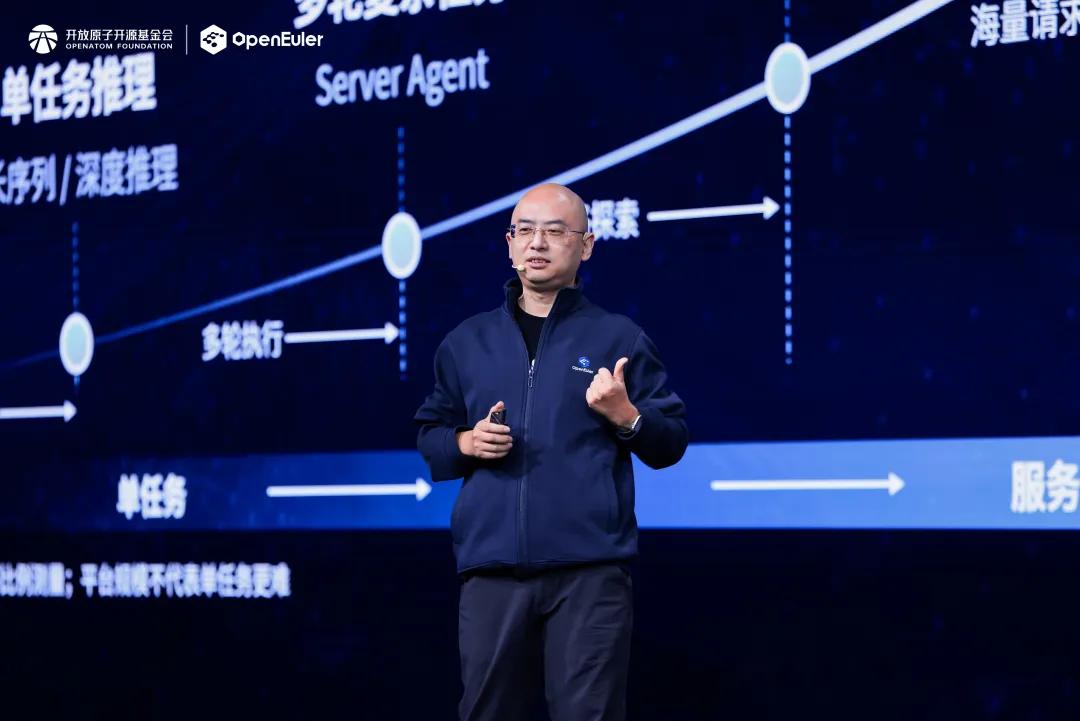
The summit also featured ThinkProcess (ThinkPro), an execution abstraction designed to connect an AI agent’s reasoning and exploration state with operating system resource scheduling. Rather than treating an agent only as a conventional application process, ThinkProcess explores how the operating system can become more aware of an agent’s evolving execution requirements.
In an agentic reinforcement learning scenario presented at the event, the community reported that a banking application using this approach improved training efficiency by more than 10%. The result illustrates the potential of coordinating agent execution and system resources more closely.
Expanding Collaboration Across the Open-Source Ecosystem
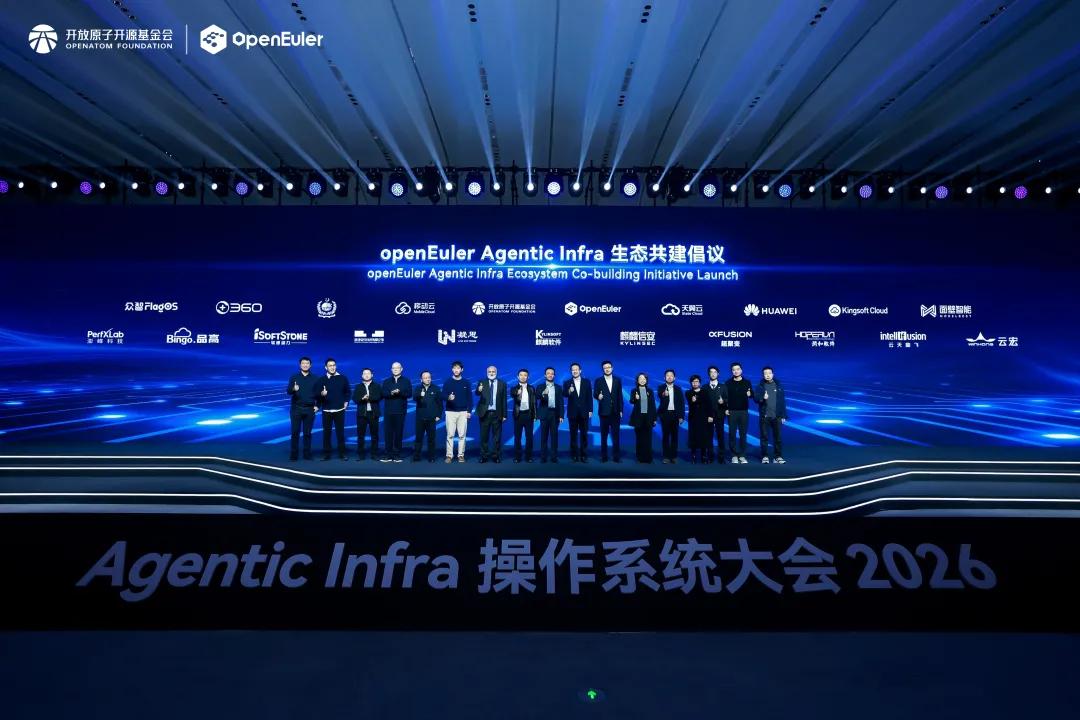
Beyond technology releases, openEuler Summit 2026 highlighted collaboration across operating systems, AI frameworks, cloud infrastructure, and open-source communities. The event introduced the openEuler Agentic Infra Ecosystem Co-building Initiative, bringing together organizations across these fields to advance open collaboration and technology development.
The community also highlighted technical engagement with open-source projects including vLLM and Ceph, as well as collaboration with SUSE on open, privately deployed enterprise AI infrastructure and with Clyso on open-source storage technologies. These efforts reflect the increasingly interconnected nature of AI infrastructure, where operating systems, inference frameworks, storage systems, and computing platforms must work together to support emerging workloads.
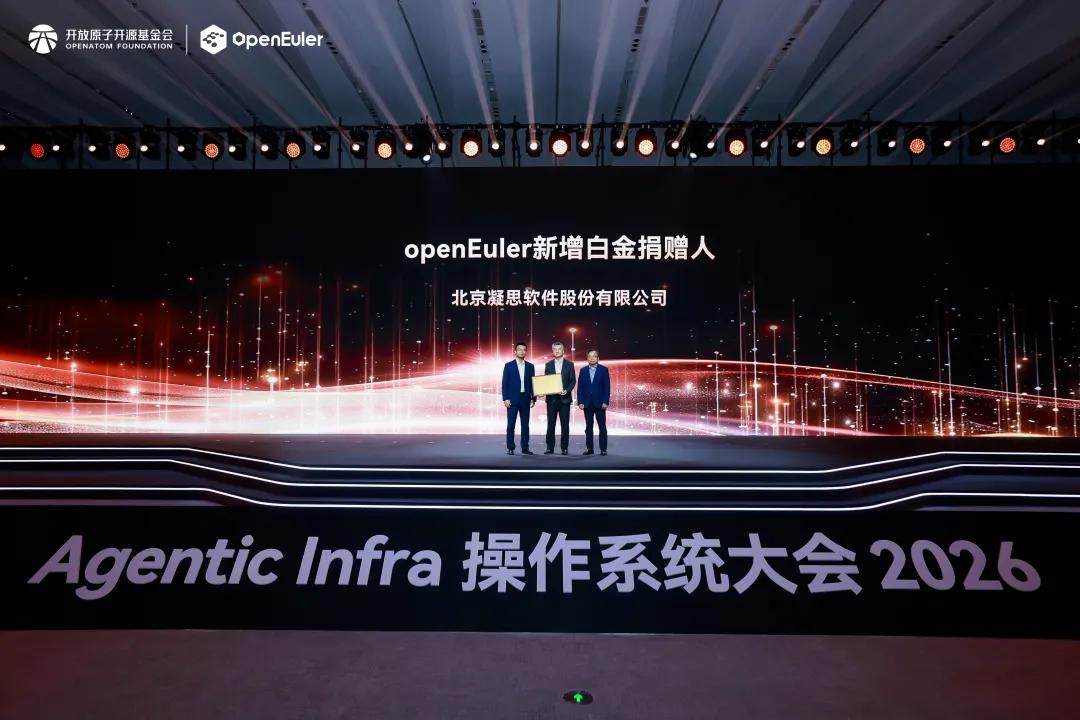
The ecosystem continued to expand during the year, with Linx Software joining the openEuler community as a platinum donor.
A Growing Community and Broader Industry Adoption
Seven years into its development, openEuler continues to expand its contributor community and industry ecosystem. Figures presented at the summit indicate that the community has brought together more than 2,200 member organizations and over 30,000 open-source contributors.
The cumulative installed base of openEuler-based operating systems in China is projected to exceed 22 million installations by the end of 2026.
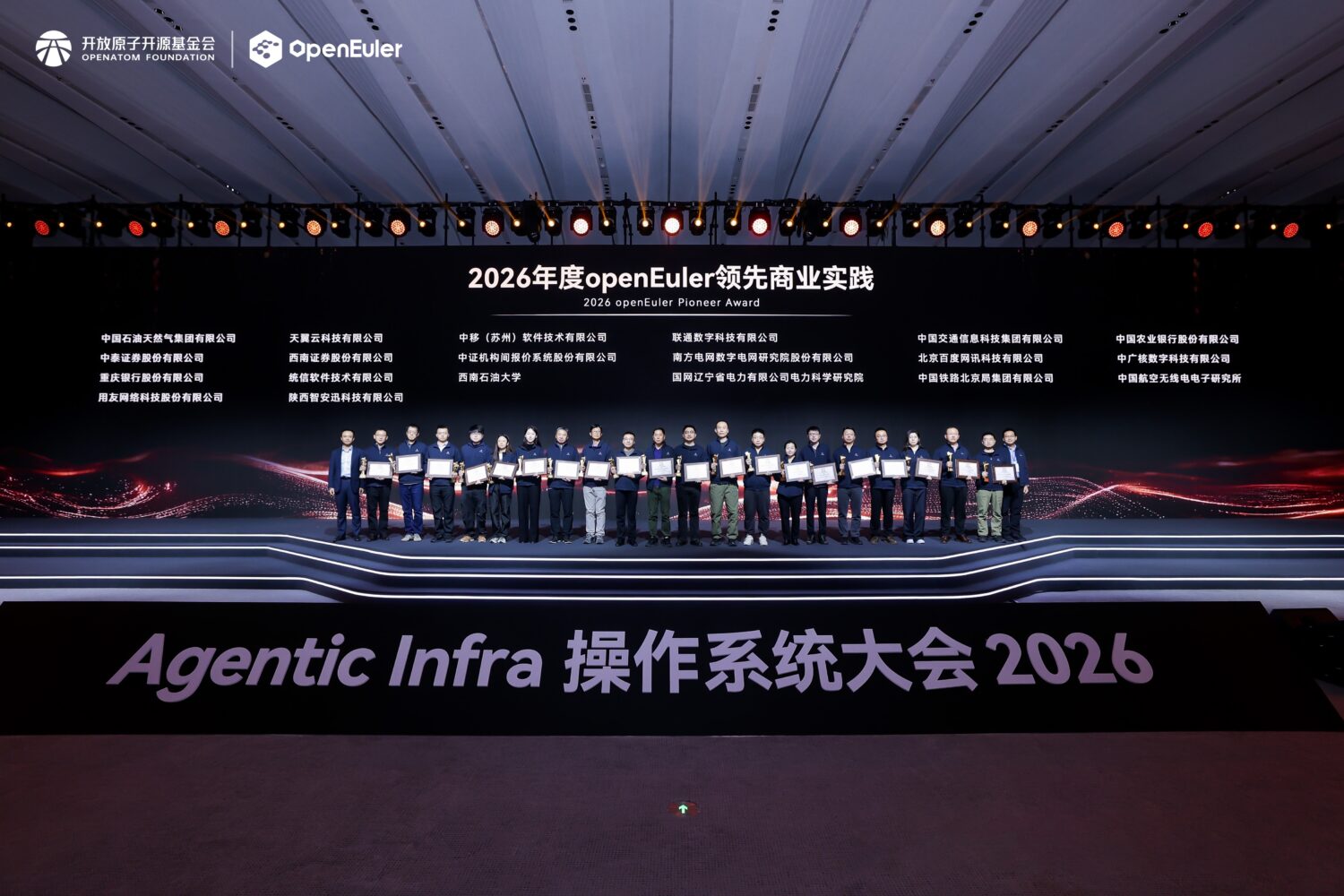
openEuler-based solutions are used across industries including telecommunications, finance, and energy, with adoption also extending into emerging areas such as satellite systems and embodied AI. The summit recognized 20 projects in the 2026 openEuler Leading Commercial Practices program, showcasing applications of community-developed technologies in real-world industry scenarios.
Applying AI to Open-Source Development and Community Operations
Alongside developing operating system capabilities for AI, openEuler is exploring how AI can improve open-source development and community operations. AI-assisted workflows are being applied to areas such as vulnerability analysis, code contributions, and community services.
By the end of 2026, openEuler aims to use AI assistance in handling 80% of Common Vulnerabilities and Exposures (CVEs) and to achieve full integration of AI agents into its community service workflows. These goals are part of a broader effort to improve the efficiency and accessibility of community infrastructure, allowing developers to focus more time on technical work and collaboration.
The summit also recognized outstanding contributing organizations and individual contributors through the 2026 openEuler Contribution Stars Awards, acknowledging the developers and organizations supporting the community’s technical progress.
Building the Next Generation of Open Operating Systems
As agentic AI moves toward more complex, production-oriented applications, infrastructure requirements are extending beyond raw computing capacity. Resource coordination, isolated execution, inference optimization, memory management, observability, and security are becoming essential across the software stack.
Through the evolution of its SuperPoD software stack, the introduction of agentic infra capabilities, and continued collaboration with open-source projects, openEuler is working to address these challenges at the operating system level. The developments presented at the summit reflect the community’s ongoing effort to build an open and collaborative foundation for the next generation of AI infrastructure.
Learn more about openEuler: https://www.openeuler.org/en/