“Merging the two cities made for easier governance. But when their names were combined, history and public recognition was lost,” says local student Zhang Xiayuan. “By taking back a brand with centuries of renown, we have really been able to push tourism.”
No other Chinese city has been allowed to change its name since, and for good reason. Renaming places often creates confusion and great disagreement. In terms of new signs, maps and bureaucratic amendments, it is also enormously expensive. The exception made for Xiangyang stemmed from the strength of its case.
A rich heritage
Xiangyang emerged as a strategic choke point - a walled city on the main corridor connecting north and south China - at the beginning of the Han Dynasty more than 2,000 years ago. The Han lasted 400 years years. During its disintegration, Xiangyang was at the center of a struggle between two warlords vying to reunite the realm. To its north, the brilliant but ruthless Cao Cao ruled over China’s Central Plain. His charismatic and politically astute rival Liu Bei controlled the middle reaches of the Yangtze River to the south. This period was later fictionalized in the classic Romance of the Three Kingdoms. Perhaps no other novel is studied more in Chinese schools.
If there’s one thing the Chinese are more proud of than their classic literature, it’s their classical poetry. This reached its high point in the 7th and 8th centuries, during the Tang Dynasty, when China’s two greatest poets Li Bai and Du Fu wrote about Xiangyang. Another famed Tang poet, Meng Haoran, was a resident. He rhapsodized about the city’s surrounding mountains, rivers and retreats.
Lastly, during the 13th Century Mongol conquest of China, Xiangyang held up the advancing armies of Kublai Khan. The siege of the city lasted five years. It was fictionalized by the author Louis Cha in the 1950s and 60s in his wildly popular magnus opus, the Condor Trilogy. Cha is the biggest selling Chinese-language novelist in history. More than a hundred film and television adaptations have been made of his books.
Nighttime spectacle
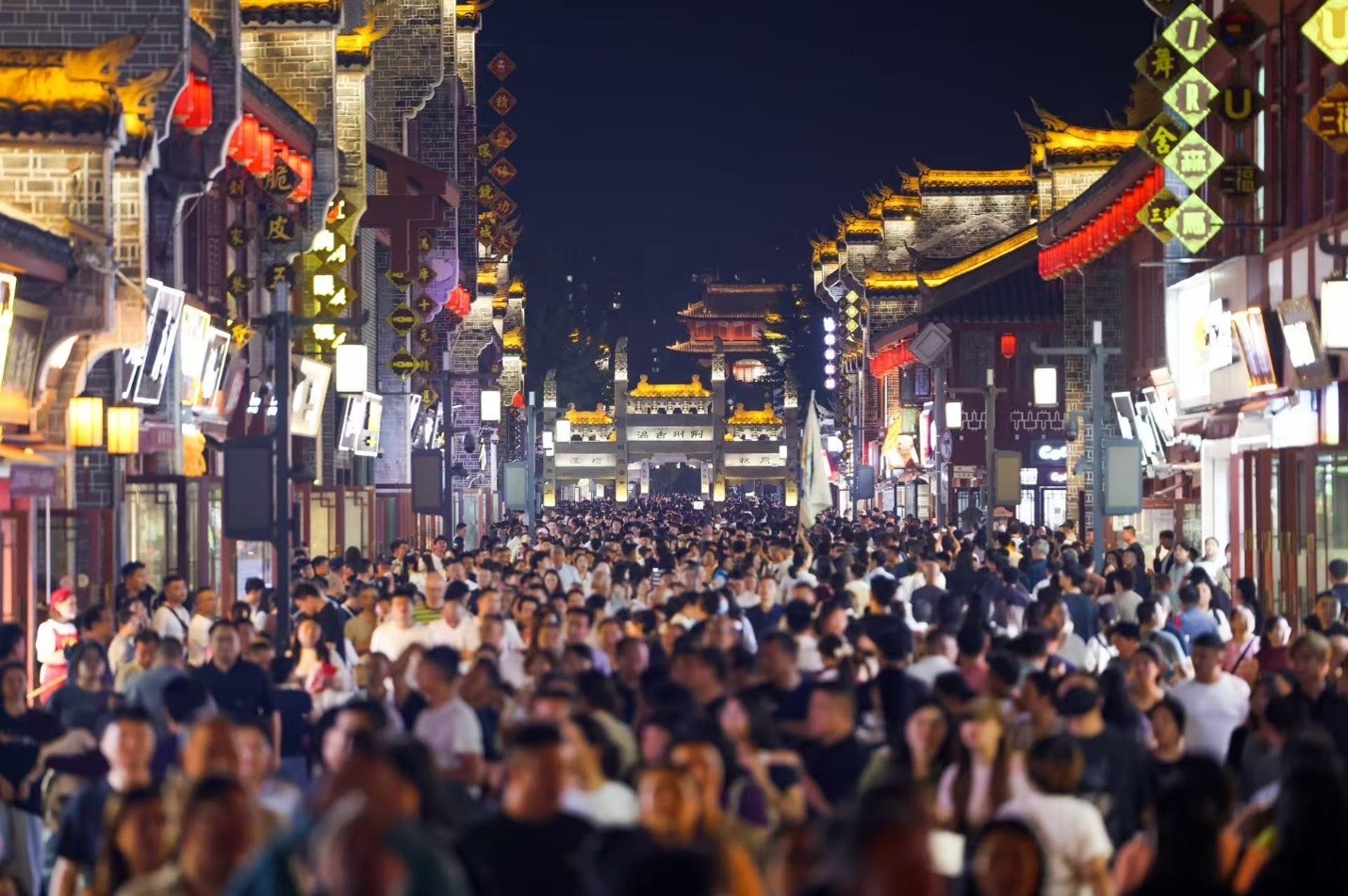
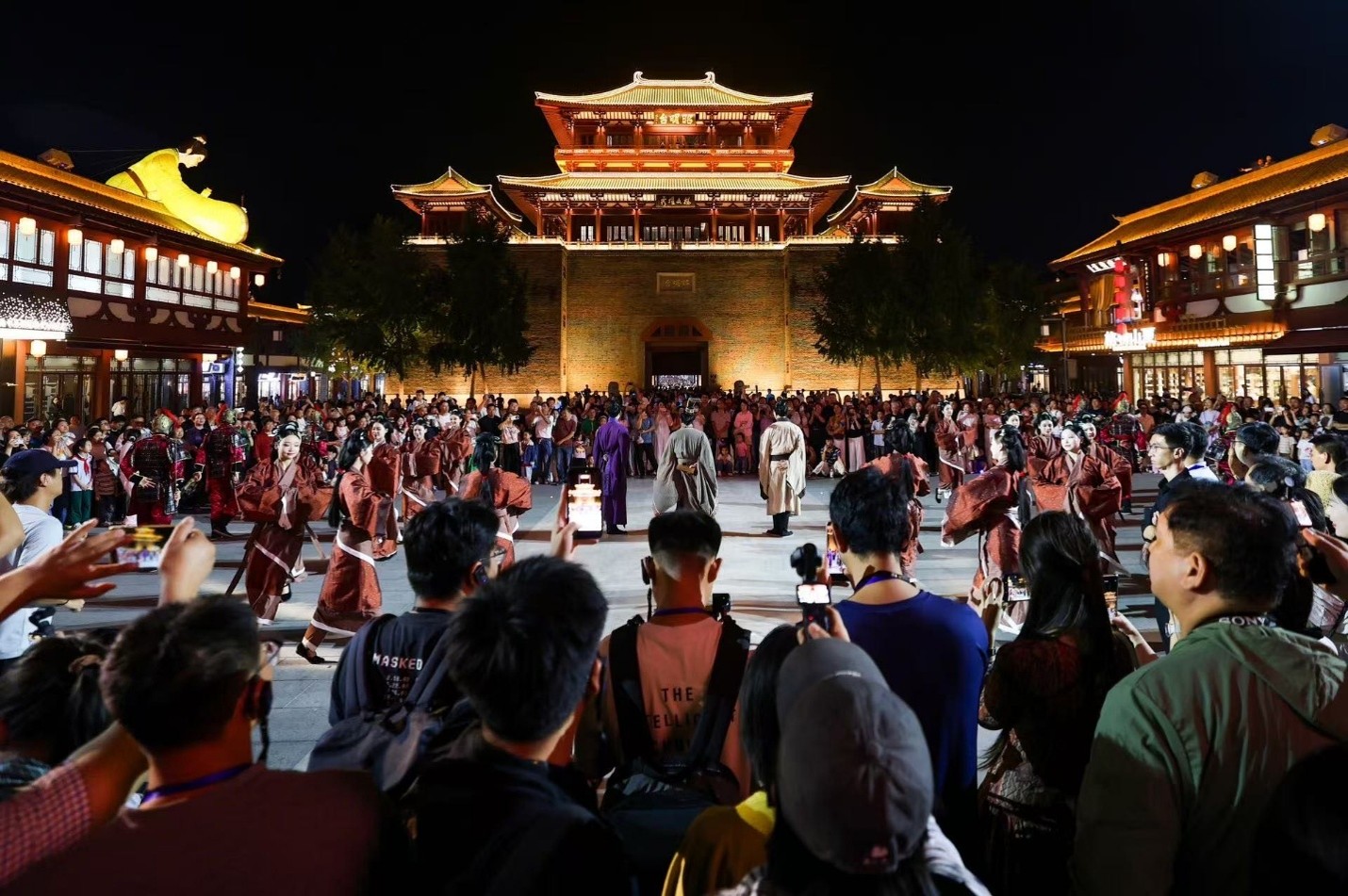
For foreigners curious to know what a ten-fold increase in tourism looks like, a good place to start is the old city pedestrian area, which in the 1990s was rebuilt in imitation Ming-Qing style. After sunset its wide main drag is flooded with crowds that in the Western world would normally only be seen in the vicinity of a major sporting stadium.
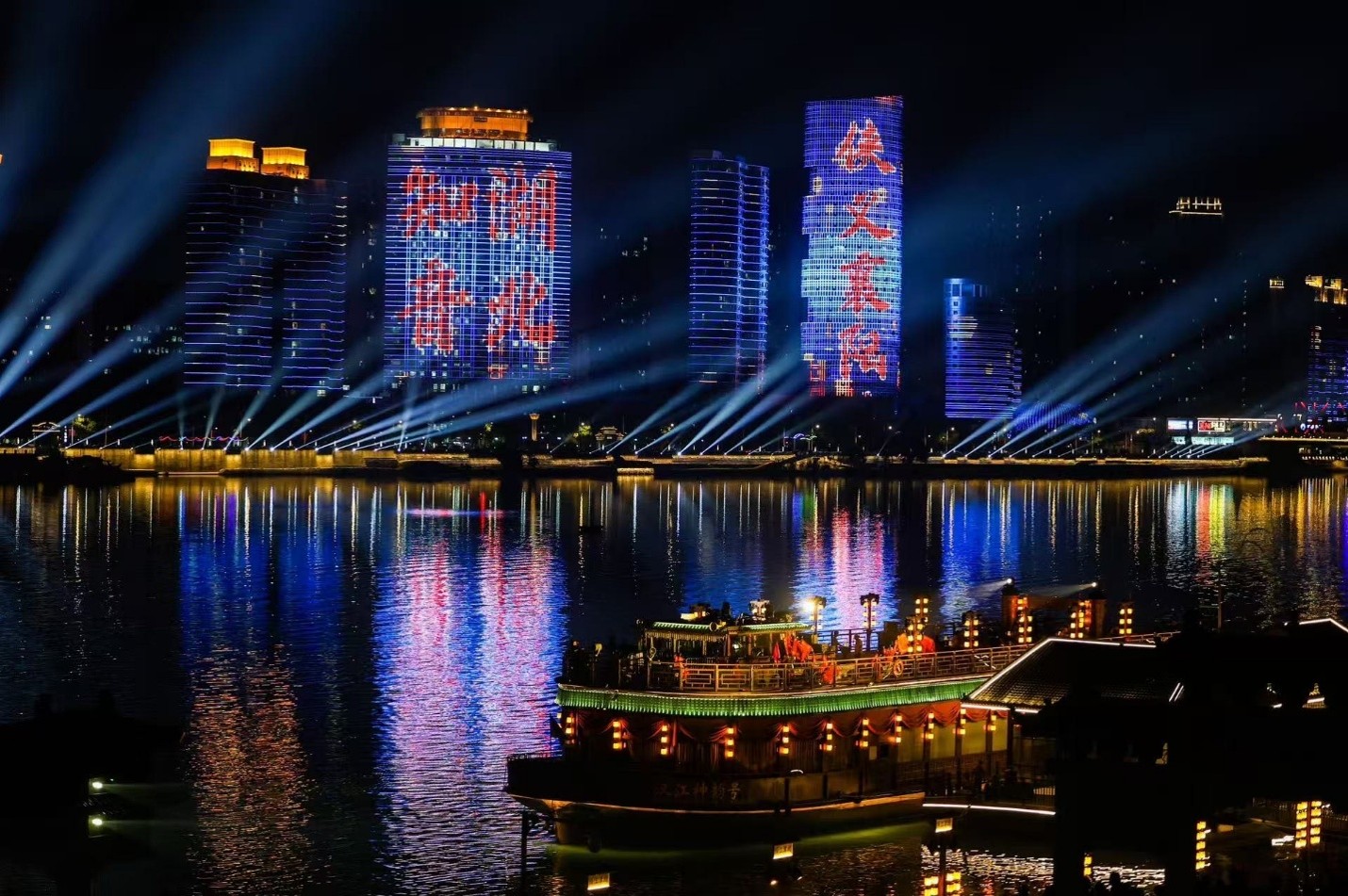
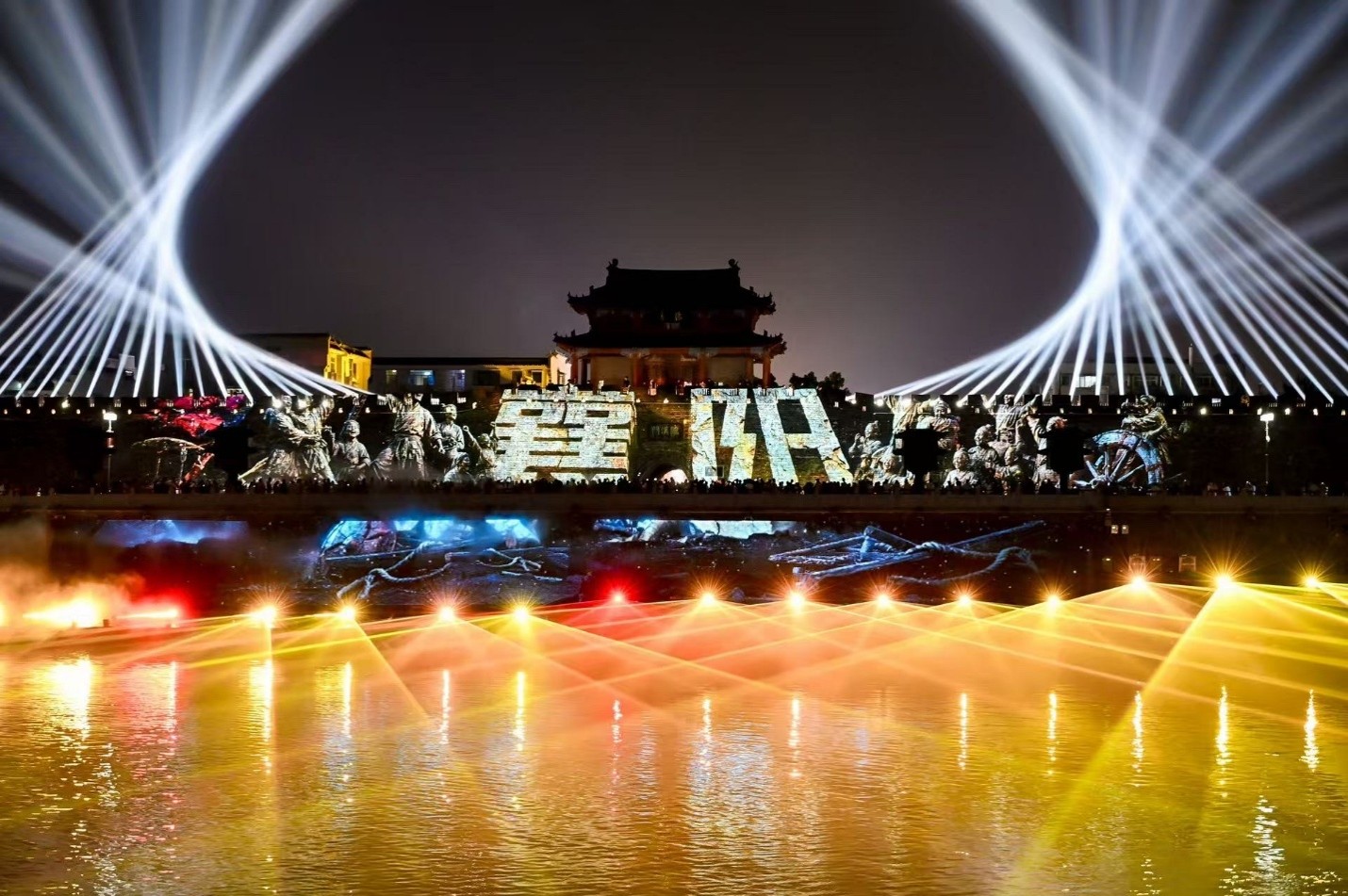
At the thoroughfares’s northern end lies the Han River Gate. It is one of several in the 7km-long Ming Dynasty defensive wall that still surrounds the old city, alongside its broad river-fed moat. Outside, a crowd of thousands of spectators is waiting along the river for the next performance of the “Chivalrous Xiangyang” sound and light show. Behind them, the shimmering LED media facades of a row of skyscrapers are reflected by the broad waters of the Han. Towering up in front is the imposing city gate.
Suddenly, a gasp goes up from the crowd as hundreds of spotlights lining the river snap on, flooding the night sky with a dazzling, rapidly shifting criss-cross display. To booming music, a grand animation of a Mongol assault on Xiangyang is screened on the wall. It is a terrifying affair, with massed trebuchets, skies darkened with arrows, thundering war drums and, ultimately, a roar of triumph from the valiant warriors of the Song Dynasty who repel the attack.
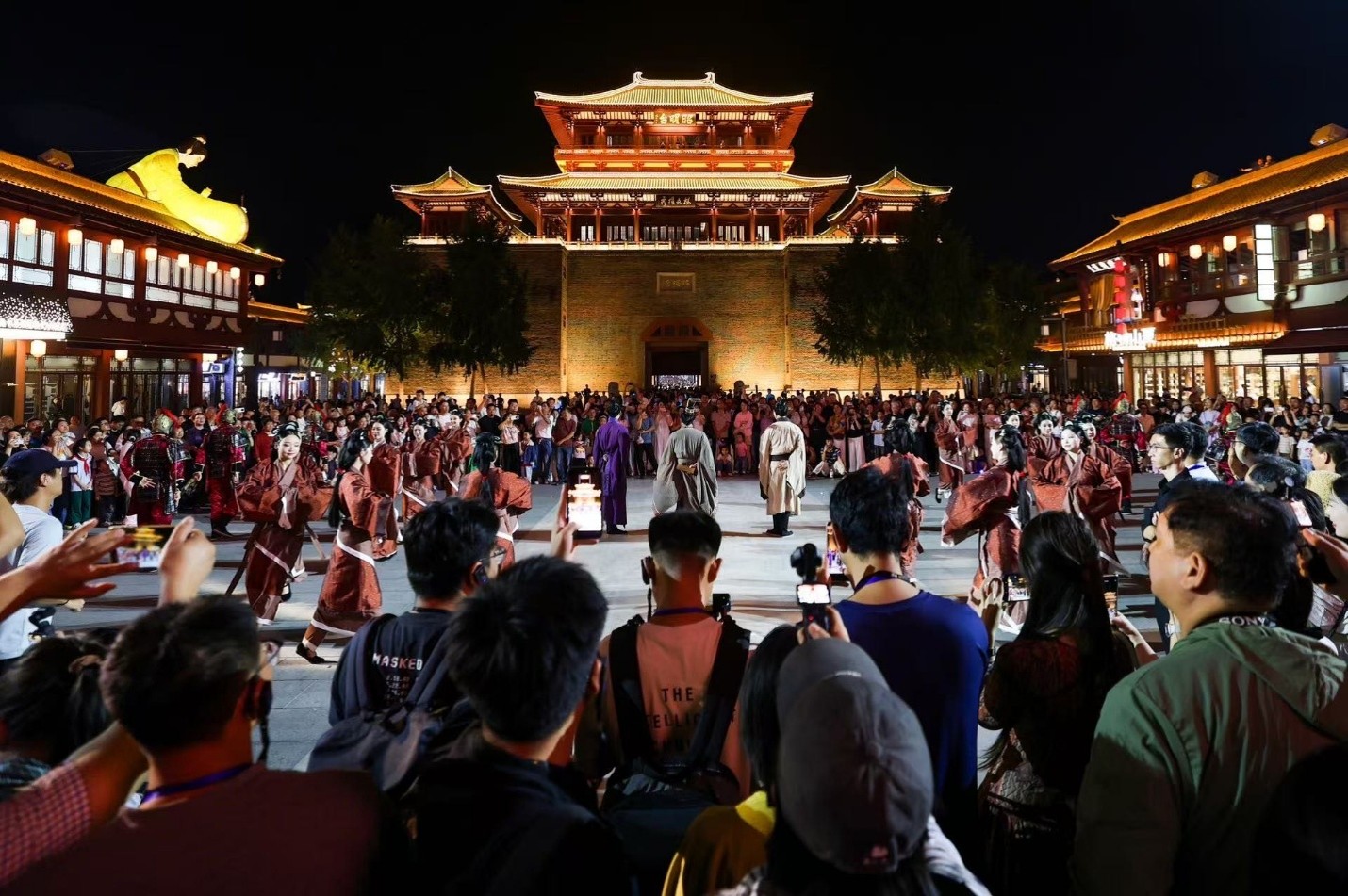
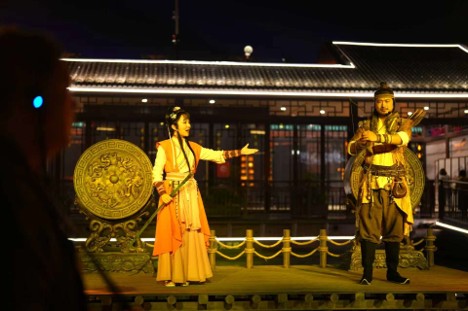
Elsewhere in the old city, themed street performances are common. Some are re-enactments of episodes from the Romance of the Three Kingdoms or Condor Trilogy. Others are classical instrumental renditions or graceful dances. There are also stately processions of performers garbed in flowing robes of the Han, Tang and Song dynasties. From the large numbers that gather in anticipation of each show, it’s clear these are enormously popular. And witnessing the often ecstatic enthusiasm of the performers, it’s hard to tell who is enjoying each show the most.
In 2009 China’s State Council adopted the goal of building tourism as a pillar industry. More than simply boosting consumption, an explicit aim has been to teach Chinese history and civilization, and strengthen cultural confidence.
Dressed in the impressive black uniform of a Tang Dynasty imperial bodyguard, Ma Chenyu, who performs part-time, is waiting his turn to go in front of the crowd. “These performances symbolize our ancient past and its traditions,” he says. “Taking part in them makes me proud.”