
The shadows within
While Western cultures typically associate spirits and monsters with the onset of winter and its long nights, in Japan, people tell ghost stories to relieve the summer’s heat. Contrary to Halloween, which only gained popularity in Japan during the 1970s and 1980s, the custom of sharing chilling tales in the summer has its roots in the Edo period (1603–1867).Japan’s summers are notoriously hot and humid, and before air conditioning, the goosebumps caused by a good scare offered a welcome distraction from the oppressive weather. These ghost stories, known as kaidan, became immensely popular, and the tradition of frightening one another during the summer has endured to this day.
The ancient art forms of kabuki and noh have long captivated audiences with their portrayals of the supernatural world and restless spirits. In the 19th century, Lafcadio Hearn, a writer and traveler born in Greece and raised in Ireland who later became a Japanese citizen, introduced many kaidan to the Western public through the tales told by his Japanese wife, Koizumi Setsu.
Then, during the 1960s and 1970s, kaidan monogatari and other supernatural tales made their way to the big screen and later to television, terrifying new generations of young Japanese. Manga followed suit, with acclaimed horror authors such as Junji Ito, who received the Fauve d’Honneur at France’s Angoulême International Comics Festival, terrifying readers across Japan.
For some, telling ghost stories was not enough. Another summer tradition gradually developed: spooky challenges. During the Edo period, 100 samurai warriors would gather in a circle and tell each other ghost stories. After each tale, one of the hundred candles placed before them would be extinguished, leaving the group in ever-deepening darkness. The ritual was even thought to conjure malevolent spirits into our world. Known as hyakumonogatari kaidankai (“the gathering of one hundred ghost stories”), the custom also allowed samurai to prove their courage, who dared not leave the circle first. Like other spirit-summoning games that gained fame later, this ritual was closely tied to the summer season.
Another tradition, which dates to the Heian period (794–1185) and is still popular among students today, is kimodameshi. It is the “test of courage.” Participants go alone or in groups into eerie locations—forests, abandoned buildings, tunnels, or places reputed to be haunted—to test their bravery.
To experience Japan’s culture of yōkai and its summer chills, no need for a time machine. From July 3 to August 31, the Yokai Immersive Experience Exhibition Kagoshima will delve into this captivating facet of Japanese culture. The exhibition traces the origins of Japanese spirits, while showcasing the work of artists who have immortalized their unsettling forms on paper. It offers visitors the chance to confront these supernatural creatures, embodiments of universal fears and desires, all while staying safe out of the summer heat.
Matsuri and O-Bon: a journey back home
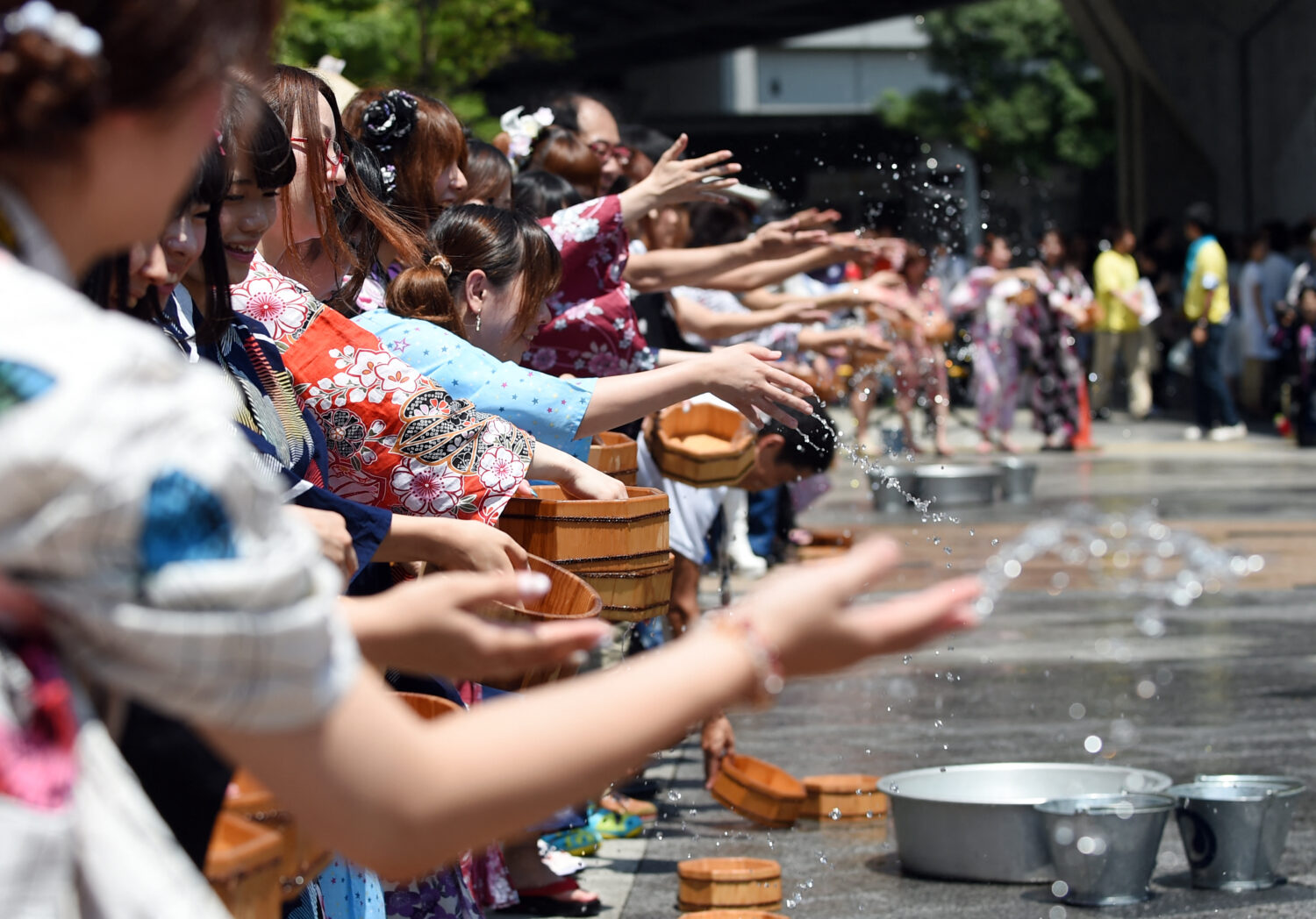
After enduring the day’s suffocating heat, the Japanese welcome the summer night with delight. One by one, soft lights begin to appear: the lights of the matsuri.These traditional festivals offer moments of relaxation for families, friends, and couples alike. Dressed in colorful yukata decorated with goldfish, dragonflies, or elegant flowers, they stop at food stalls serving shaved ice covered in flavored syrup or freshly fried yakisoba. As night falls, fireworks burst into the sky, capturing everyone’s attention and creating a sense of unity. Matsuri follows a familiar routine, allowing participants to rediscover the same scents, flavors and celebrations yearly. A moment filled with first stirrings of love or friendship for the younger ones and deep nostalgia for older generations.
Three major matsuri define Japan’s festival season from late spring into summer. The first is the Kanda Matsuri, held every other year in mid-May around the Kanda Myōjin Shrine. It brings together residents and shopkeepers from the surrounding neighborhoods, dressed in happi coats bearing the colors and emblems of their local communities as they proudly carry their mikoshi, these portable shrines believed to temporarily house shinto deities. Over the course of three days, hundreds of processions make their way through the streets to the sound of drums and chants, creating a unique atmosphere.
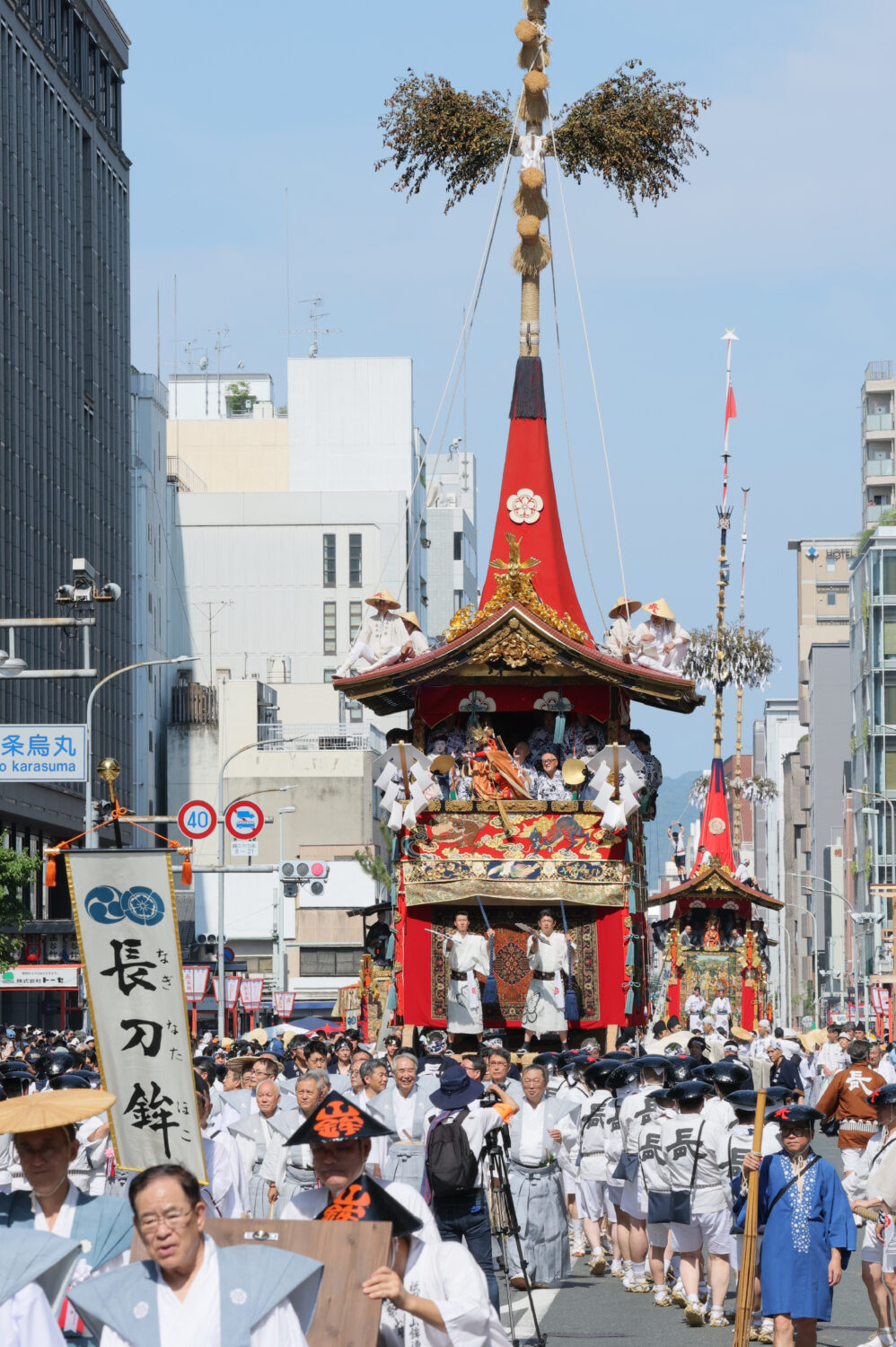
In July, the focus shifts to Kyoto and Osaka, with the Gion Matsuri and the Tenjin Matsuri. In Kyoto, the Gion Matsuri is renowned for its towering yamahoko floats—lavishly decorated wooden structures that can exceed 20 meters high—which slowly parade through the streets of the former imperial capital. The atmosphere is elegant and almost solemn. Osaka’s Tenjin Matsuri offers an entirely different spectacle: after the land processions, hundreds of illuminated boats take to the river before a spectacular fireworks display lights up the night sky. Each of these three great festivals reveals a different facet of Japan and reflects the distinct identity of its host city: Tokyo’s popular energy, Kyôto’s refinement, and Osaka’s exuberance.
Summer is also the season of Tanabata, celebrated on either July 7 or August 7 depending on the region. The festival commemorates the legends of Orihime and Hikoboshi, represented by the stars Vega and Altaïr, lovers separated by the Milky Way who are allowed to meet only once a year. Throughout Japan, people hang colorful pieces of paper with handwritten wishes tied to bamboo branches.
Beyond the major summer festivals that attract millions of Japanese and foreign tourists every year, the season is also characterized by the traditional custom of O-Bon. Held around mid-August across most of Japan (or in July in certain regions), it commemorates the return of ancestors’ spirits to the realm of the living. Families make pilgrimages to their ancestral hometowns to tend to graves, clean tombstones, and decorate them with flowers, burning incense, and making offerings.
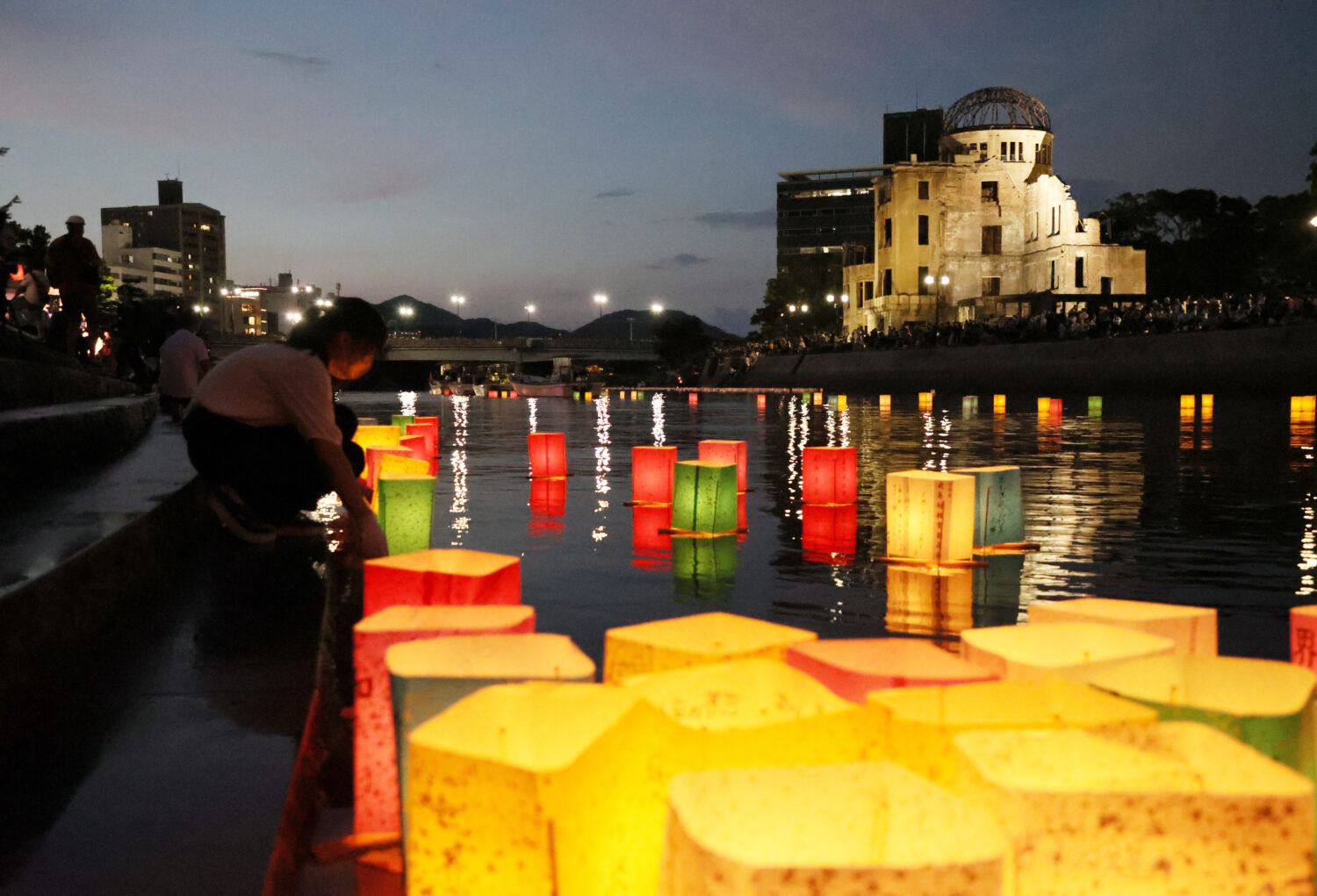
Customs vary across the country, but they all have the same goal: to symbolically accompany the spirits of the dead on their journey. In certain communities, people light lanterns and release them into rivers, serving as guides for the spirits on their way to the afterlife.
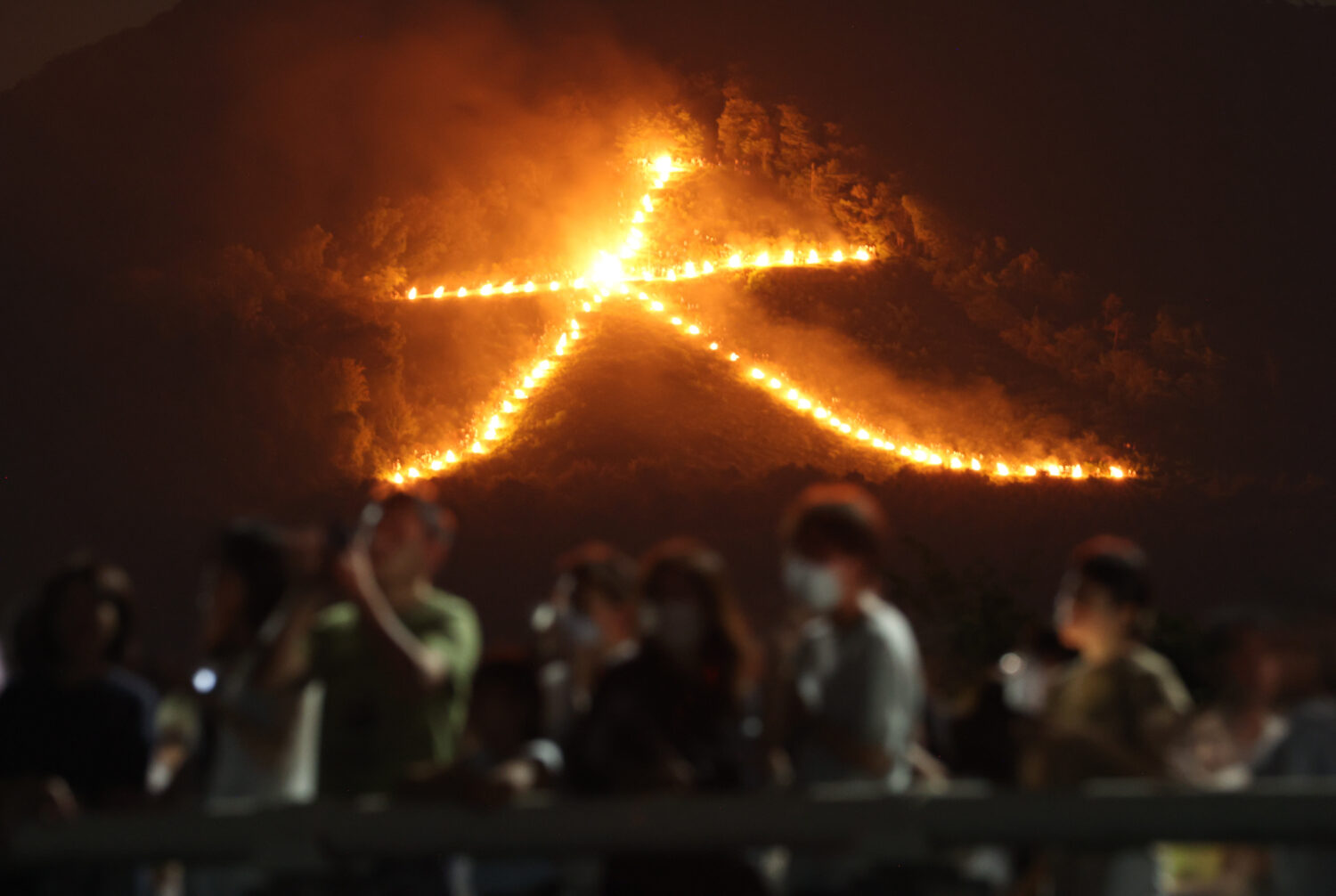
In Kyôto, O-Bon ends with one of the most iconic summer spectacles: gozan no okuribi. Five immense characters and symbols are set ablaze on the mountains surrounding the former capital. According to tradition, these fires guide the ancestral spirits back to the afterlife after they visit the world of the living, bringing this period of remembrance to a conclusion that is both solemn and spectacular.
The carefree spirit of the night
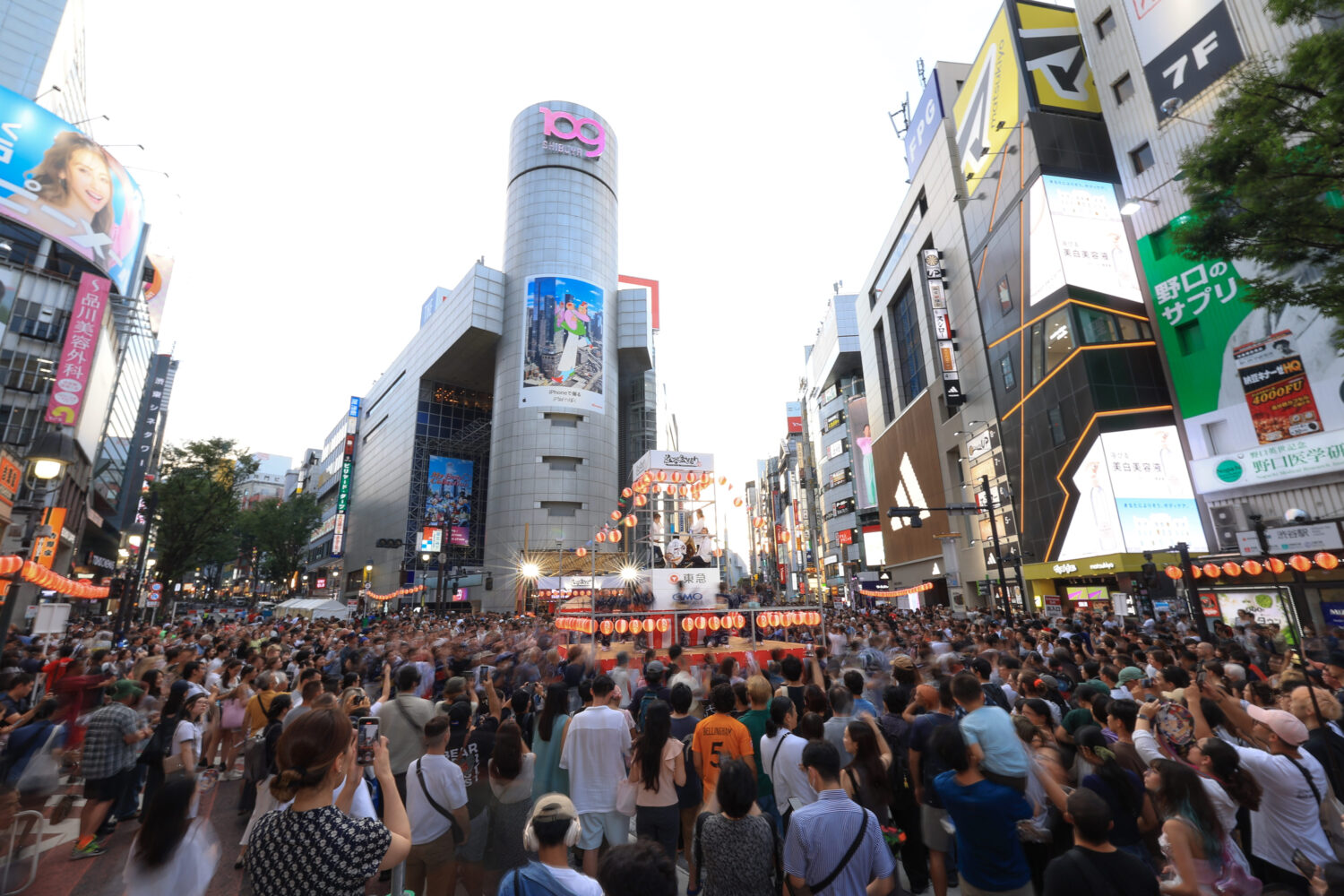
If the night stays warm, and hard to bear for visitors from colder countries, there’s no question of standing still. Part of O-Bon ceremonies honoring ancestral spirits, Bon Odori, is among the country’s most inclusive traditions. Unlike Shinto or Buddhist rituals, which may seem confusing to foreigners, participating in a Bon Odori dance requires nothing more than the courage to join the circle. Everyone is welcome.In Nakano, Tokyo, as well as in Gujō Hachiman in Gifu Prefecture, experienced dancers and complete beginners come together in flowing circles of yukata. Choreographies are easy to master, yet endure long enough for participants to truly connect with those around them. Some Bon Odori festivals continue until dawn, with dancers and musicians taking turns to keep the celebration alive. After self-reflection and honoring ancestors, the pure joy of dancing embraces both light and shadow, people from all ages and backgrounds to celebrate life.
But no need to dig deep into centuries-old traditions to enjoy a Japanese summer. The Fuji Rock Festival, one of the country’s largest open-air music events, welcomes more than 200 Japanese and international artists every July in the mountains of Niigata Prefecture.
Summer camping has also become an essential seasonal pastime. High-quality grills, meticulously placed lighting around the tent, and impeccably arranged furniture and seating are all hallmarks of this experience. Japanese enthusiasts transform their campsite into a miniature home, with an attention to detail that often surprises outsiders. Beach fireworks, beer gardens, mushi-tori (insect hunting)… many other summer traditions can distract and soothe the heat.
Although the cherry blossom season and the image of a fast-paced technological society are considered more representative of Japan, summer is no less captivating. It allows the Japanese to put their concerns on hold and enjoy moments of relaxation and introspection. Heat and shadow bring certain things back to the surface: collective fears, family rituals, a return both to self and to community, and nostalgia for another Japan. These are all fascinating subjects that only need a curious eye and an attentive ear.
By Isabelle VANSTEENKISTE
Freelance journalist
*The stories and materials above are provided by JIJI Press or AFPBB News.
Feel free to feature these stories in your own media, as long as they are properly credited.