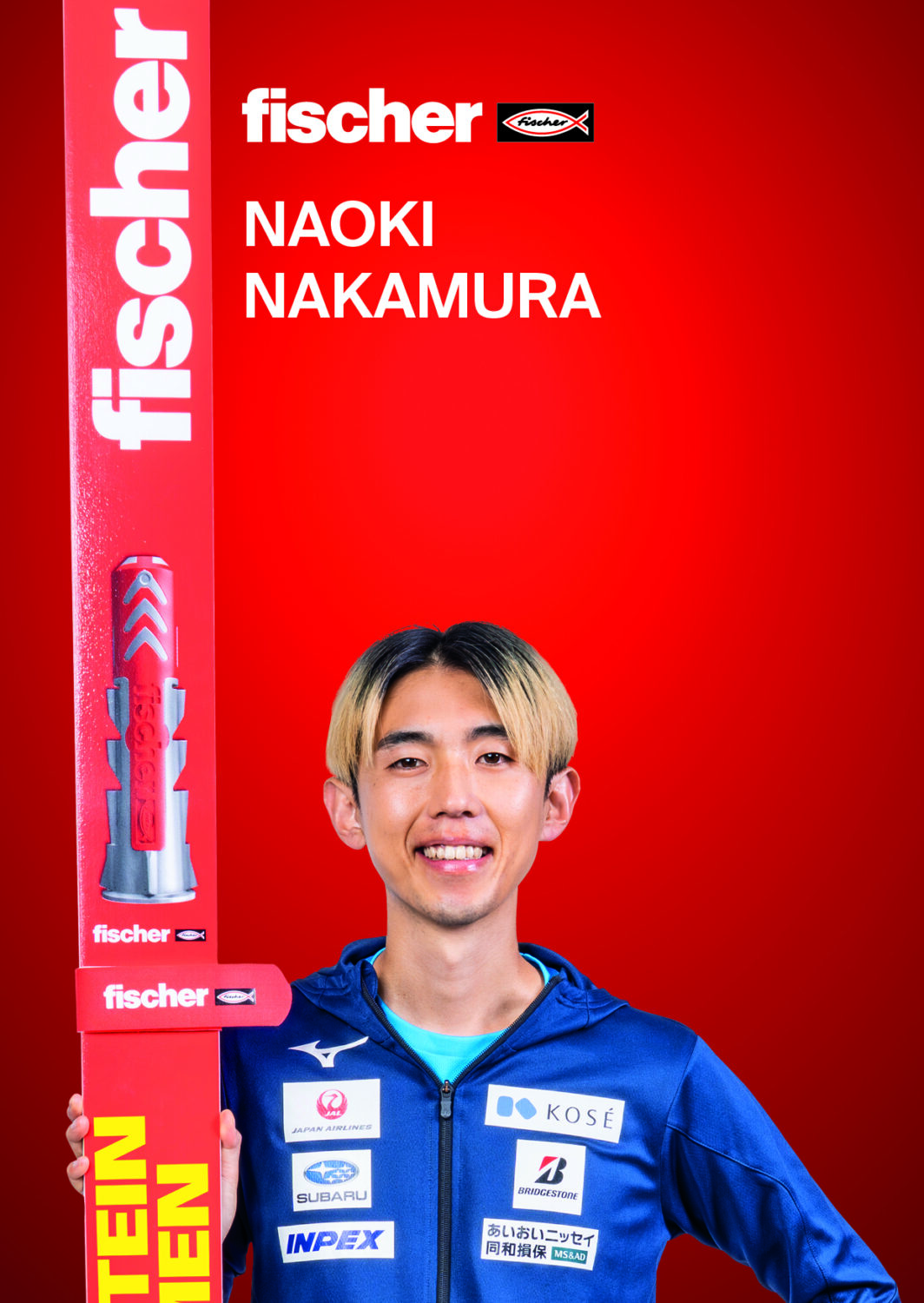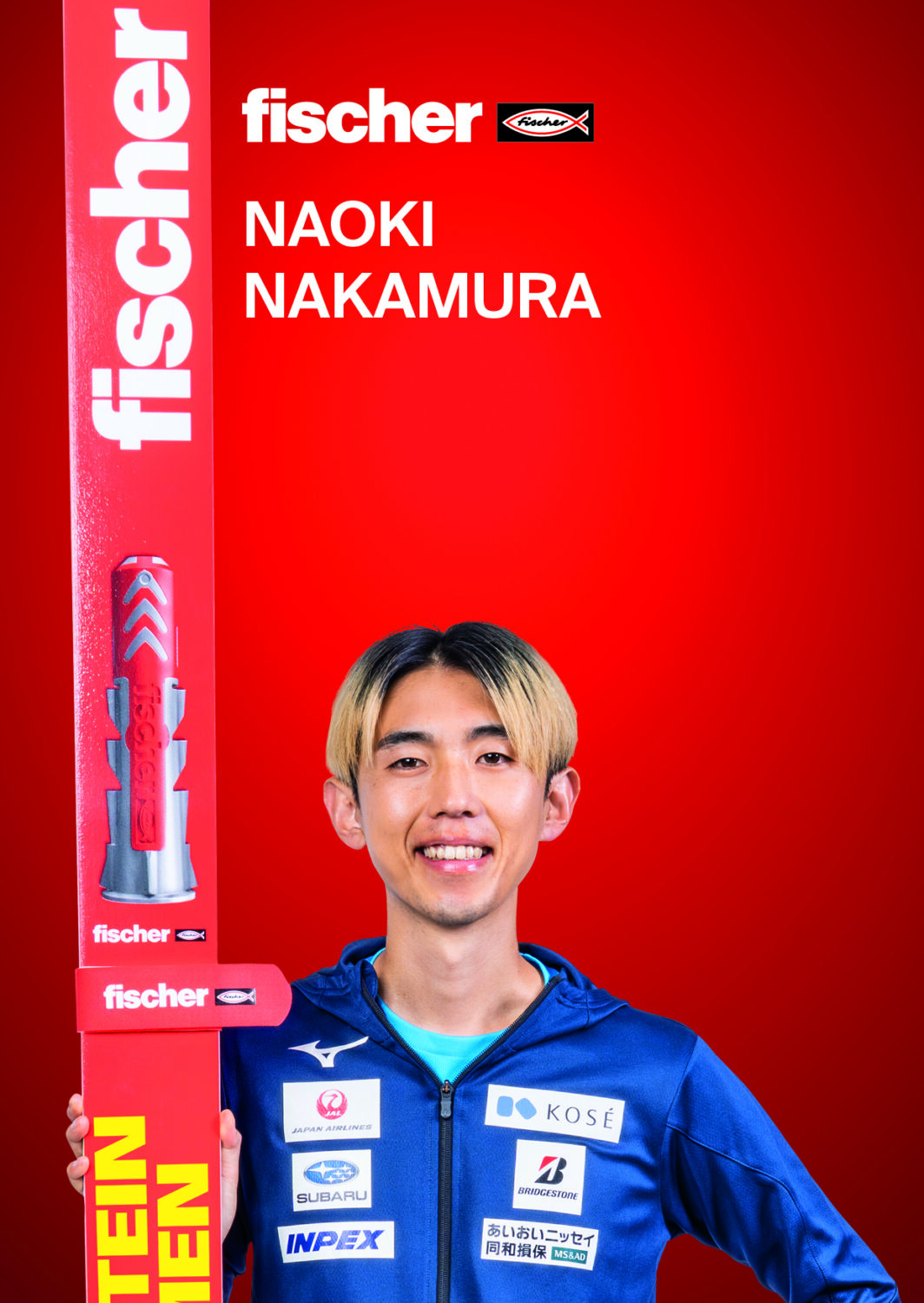
The new ski jumping season is just around the corner. How are you feeling about the start of the season? How have your preparations gone, and what are you particularly look ing forward to in the coming months?
I've been building up step by step with a calm mindset, without increasing the amount of training, and I really felt it pay off during the Summer Grand Prix. So, this winter I want to keep that calm state of mind and fight through the whole season with it.
You’re heading into a new season with the fischer team and will also be competing under a new shared identity: the red ski. At the same time, fischer and Fischer Sports are mov ing even closer together. How do you view this development, and what does it mean to you to be part of this international team?
I think fischer and Fischer Sports moving closer together is a great thing for the ski jumping community. It brings a completely new face and a new company into our sport. And because fischer comes from the area around Titisee-Neustadt, there is already a strong ski culture in the company’s roots. That's really great for ski jumping. Being part of this international team means a lot to me. I'm really proud to be on the team, and I love the red colour, the character of the red fischer ski. Everyone on the team has a great personality, and they are all great ski jumpers. We always respect each other, so there's a really strong friendship between us.
What does being a ski jumper mean to you personally? What fascinates you about this sport, and what drives you to push yourself to your limits time and time again?
For me, ski jumping is my skill, the thing I'm really good at. It's what allows me to make my way in life, so it's very important to me. And I simply love this sport. When I jump over 200 meters, I love that feeling so much. It's not just strong wind or strong air under me; it feels like I'm driving the air, gliding on it. That feeling is why I love ski jumping. Outside of jumping, I'm also building my own projects with friends. When I jump well, those projects can reach more people, and when they grow, they give me the freedom to do even more ski jumping. It's a circle, and that's my energy. I also want to bring happiness to the people around me: my friends, my coaches, other ski jumpers, the ski jumping com munity and my sponsors. I want them to say, "Wow, Naoki jumped so far!", or: "He made such a fun video about ski jumping and the red ski!" Every time, I just need to jump well, and then happiness and smiles come to everyone who supports and watches me.
Anyone who wants to succeed in ski jumping must be able to cope not only with successes but also with setbacks. How do you manage that? Is there an experience in your career from which you have learnt a great deal?
Yes, I've had a lot of setbacks. I've always competed alongside Ryoyu Kobayashi and Sara Takanashi. We're good friends, but in ski jumping I've lost to them many times. Every time I felt like my skills weren't good enough, I kept asking myself how I could beat them. But at some point, I realised that this way of thinking wasn't working. Even if I jump really well, Ryoyu is one of the most fantastic ski jumpers in the world, and he jumps well too. I can't change how other athletes jump. What I can control is my own work. So, I let go of those feelings, the frustration of losing and the urge to beat others. Now I simply focus on my tasks and keep going, without too much emotion. That's how I approach ski jumping today.
A typical competition day is characterised by fixed routines and intense concentration. Do you have any specific rou tines or rituals that give you a sense of security before the jump? And what is one thing you absolutely cannot do with out on a competition day?
Yes, I have my own way. The key is not to think too much about ski jumping. I focus only on one key point, and that's it. I also don't want to do too much before the competition. For example, I don't do many imitation jumps beforehand because I already have the image and I already know my key point. I don't need anything extra. Just the basics. As the Zen saying goes, the ar row is not shot; it is released. I just focus on what I can do right now. So, the one thing I can't do without? Nothing special, just the basics.
As well as individual performance, teamwork also plays an important role. How do you experience the team spirit within the international fischer team? What can you learn from the other athletes, and what do you yourself bring to the team?
Yes, the team really has a great spirit. For example, Jan Hörl is a good friend of mine, and he's always doing funny things and making everyone laugh. I think this is very important. If the mood on the hill is sad or nervous, it doesn't help your jumping, be cause ski jumping is about freedom, flexibility and creativity. So that kind of creative person and creative spirit is very, very im portant. Another example is Ren Nikaido. When we have visited the fischer Group of Companies, it was his first time, and he wanted to try doing the interviews in English. Before, he would always say, "Naoki, I don't want to talk in English, can you trans late for me?" But this time he said, "I'd like to try speaking Eng lish myself. Can you help me if I don't understand?" I was sur prised, in a good way. I think it's because of the team spirit. The other athletes perform at a really high level and have a very pro fessional mindset, and I think that changed Ren a little bit. And what I bring to the team? I don't know, you'd have to ask the others.
Finally, a look ahead: what personal goals are you taking into the new season? And at the end of the winter, what would you look for to determine whether it was a successful season for you?
I don't want to think about results. When I start thinking about results, I feel like I need more, I have to do more, and then it doesn't work. That's what I've learned from experience. For me, a successful season is about stories. I have stories at every competition and every season, but until now I never really shared them. If I have a story but nobody knows about it, it stays with me. So, I want to share them through videos, photos, art or anything else. If someone is moved by my stories, if it makes someone happy or makes them feel something, and if I keep doing this until the end of the season, then I think it was a suc cessful season. For ski jumping, for media, for business, for eve rything.
The fischer Group, based in Waldachtal in the northern Black Forest, achieved a turnover of 1.05 billion euros in 2025 with around 4,800 employees worldwide. The family-owned company has 53 operating subsidiaries worldwide and ex ports to around 120 countries. It comprises four business divisions: fischer Fastening Systems, fischertechnik, fischer Consulting and fischer Electronic Solutions.
fischer Fastening Systems is the technological market leader in key areas of fastening technology. fischer offers products of technical excellence to a wide range of customers, from DIY enthusiasts and tradespeople to key account partners. fischertechnik is active in both the toy and education sectors with its construc tion kits. As one of only a few toy manufacturers, fischertechnik develops and manufactures its products predominantly in Germany.
fischer Consulting grew out of the expertise developed within the company it self. It is home to the fischer Process System, the core principle of which is continuous improvement. The fischer Process System is always guided by the benefits for the customer. fischer Consulting advises medium-sized enter prises, public authorities and large corporations on their journey towards lean and efficient processes. fischer Electronic Solutions develops and manufactures bespoke electronic so lutions for industry and the medical sector. Long-term partnerships and high quality, tailor-made solutions are the company’s guiding principles. As an in novation partner, fischer Electronic Solutions breaks new ground with its cus tomers towards a successful shared future.
Online: www.fischer.group