Could you start by introducing yourself?
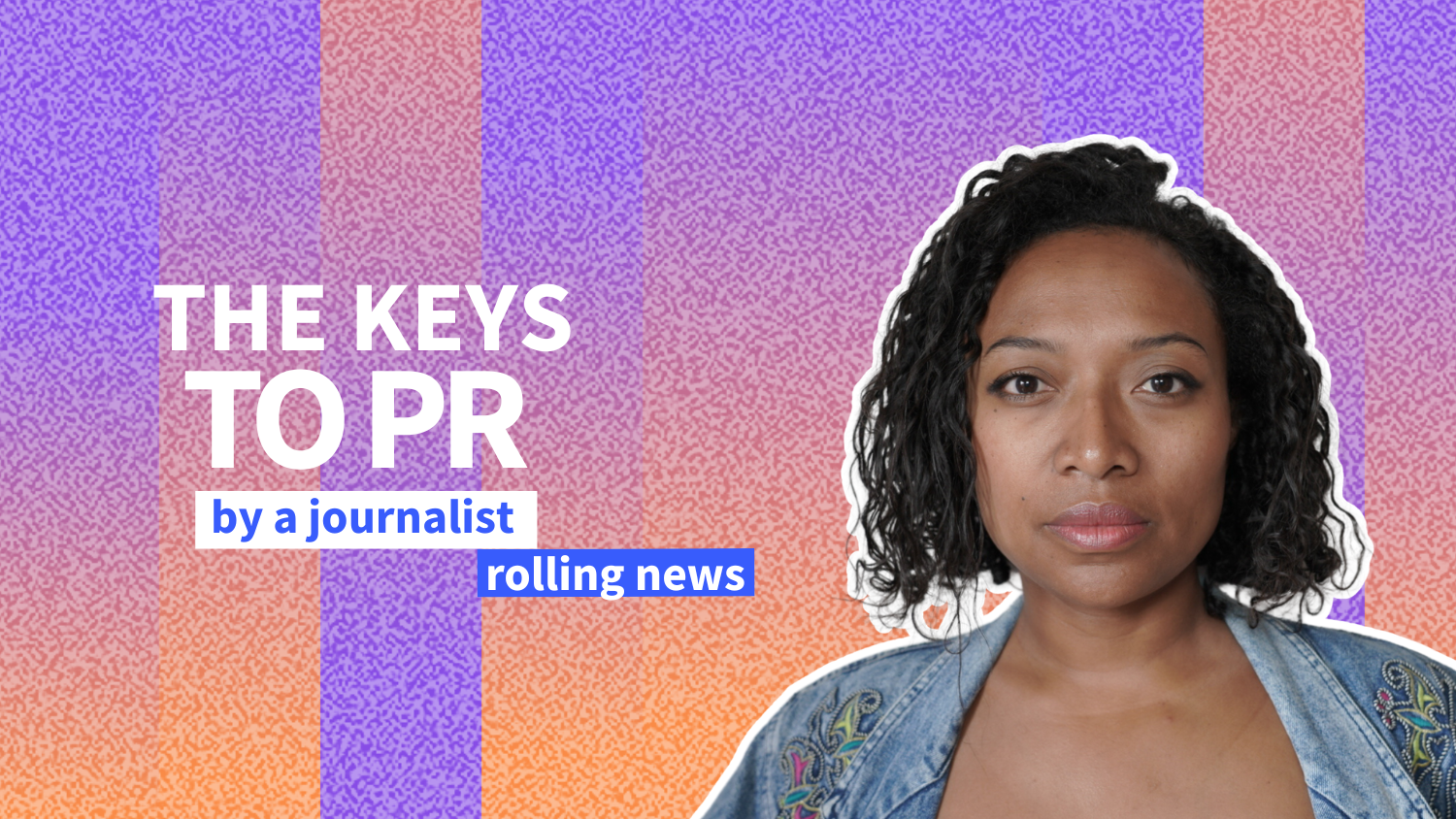
My name is Gaëlle Borgia, and I have been a journalist for around fifteen years. I began my career in the France 24 newsroom, where I worked from 2008 to 2011. Today, I am a freelance television correspondent based in Madagascar. I cover news from the island for French-language media outlets, including TV5MONDE, France 24, and Agence France-Presse, as well as English-language publications such as the BBC and The New York Times.
What are the specific challenges of journalism in Madagascar?
Madagascar has a unique political environment. There are often authoritarian tendencies. As a result, journalists may face reprisals, and sources can be threatened, silenced, or simply unwilling to speak out of fear.
For that reason, I sometimes work with anonymous sources whose names and faces I do not disclose in order to protect them. For example, I recently produced a report on the arrest conditions of demonstrators involved in the Gen Z movement. To gather information, I spoke with sources who provided details that could potentially expose them to retaliation if made public. In that case, the source remained anonymous.
There are also logistical constraints. Roads in Madagascar are often in poor condition, and travel is expensive. There have been occasions when I had to abandon a story because I lacked the resources to travel to the location.
What are your main sources of information when preparing your reports?
As a correspondent, I serve as the country's eyes and ears for newsrooms that cannot be everywhere at once. I therefore need to stay constantly informed and alert editors to developments in the news cycle.
To do this, I rely on a network of contacts built up over the years. I read the press, monitor social media, and speak with official sources such as United Nations agencies, civil society organizations, and government ministries. Most importantly, I observe what is happening around me. Whether at the market or in the street, I try to take the pulse of the country by staying close to ordinary people.
I am also subscribed to various communications mailing lists. For example, when I am working on a story related to the Ministry of Justice, I may contact its press office.
What does your relationship with press officers look like in practice?
The relationship works both ways. They contact me regarding press conferences or press trips. When I need an interview, I can go through communication departments, but that is somewhat the lowest form of journalism. I prefer to contact chief executives, chiefs of staff, or ministers directly.
What do you think about the content sent by press officers?
I receive many invitations to conferences, but most end up in my unread emails. I have attended numerous press events that never resulted in any coverage because there was no concrete message behind them.
To me, that is communication, not journalism. From a visual perspective, filming an office or a meeting room offers nothing interesting. It has no value for media outlets such as France 24 or TV5MONDE.
As for press releases, they can serve as a starting point, but they are not enough to build a story.
The problem is that some communications professionals do not understand how a television correspondent works. Press officers often pitch stories that are not visually suited to television or that do not fit within the pace of rolling news coverage. Without a strong television sequence, I cannot produce a report.
I spend a great deal of time explaining my profession and how a television news programme operates. That is both unfortunate and frustrating.
What advice would you give press officers who want to work more effectively with television correspondents?
My first piece of advice is to take the time to understand what we do.
In practical terms, this could be as simple as spending an entire day following a journalist, from pitching the story to its broadcast. Communications professionals would gain a much clearer understanding of how television news is produced, including how frequently a country's news is covered, what formats are used, and what editorial guidelines apply.
At France 24, for example, a news bulletin dedicated to Africa is broadcast seven days a week in two evening editions at 9:45 p.m. and 10:45 p.m., each lasting fifteen minutes. These are the kinds of details a press officer should know.
They must also be aware that newsrooms are operating with increasingly limited budgets. Offering to cover travel expenses may be a solution, but it immediately raises questions about journalistic ethics.
It is also important to tailor a pitch to the format of the media outlet. For television, I need images and strong visual sequences.
At the moment, I am producing a report about a women's association that encourages female high school students to pursue scientific careers. The first question I always ask is: what are we going to show on screen? What sequence in action can you provide?
The association explained that it works in schools, interacts with students, shares personal success stories, and offers internships. In that case, I can pitch a concrete television story to editors, with a clear visual sequence showing an awareness-raising session with students in a school.
There is also a real need for anticipation. Many of the media outlets I work for structure their coverage around international awareness days and major events on the global calendar. Contacting me one month in advance with a story angle connected to an international observance and a local news development can lead to a report.
Finally, the most important piece of advice is never to try to control the report.
I can accept being guided, receiving contact suggestions, or being given easier access to the field. However, the moment someone tries to impose an angle on me, the opposite effect occurs. My independence is non-negotiable.