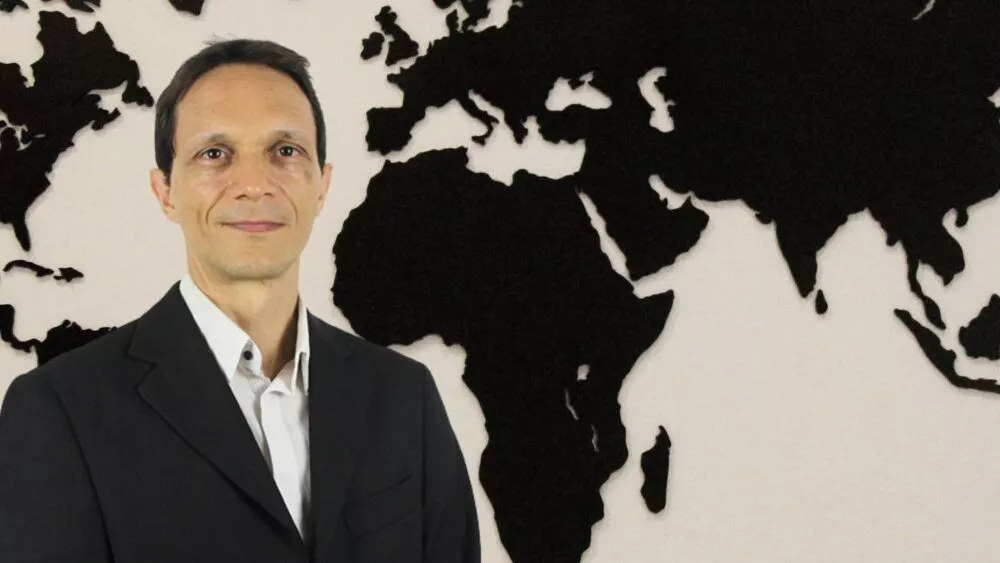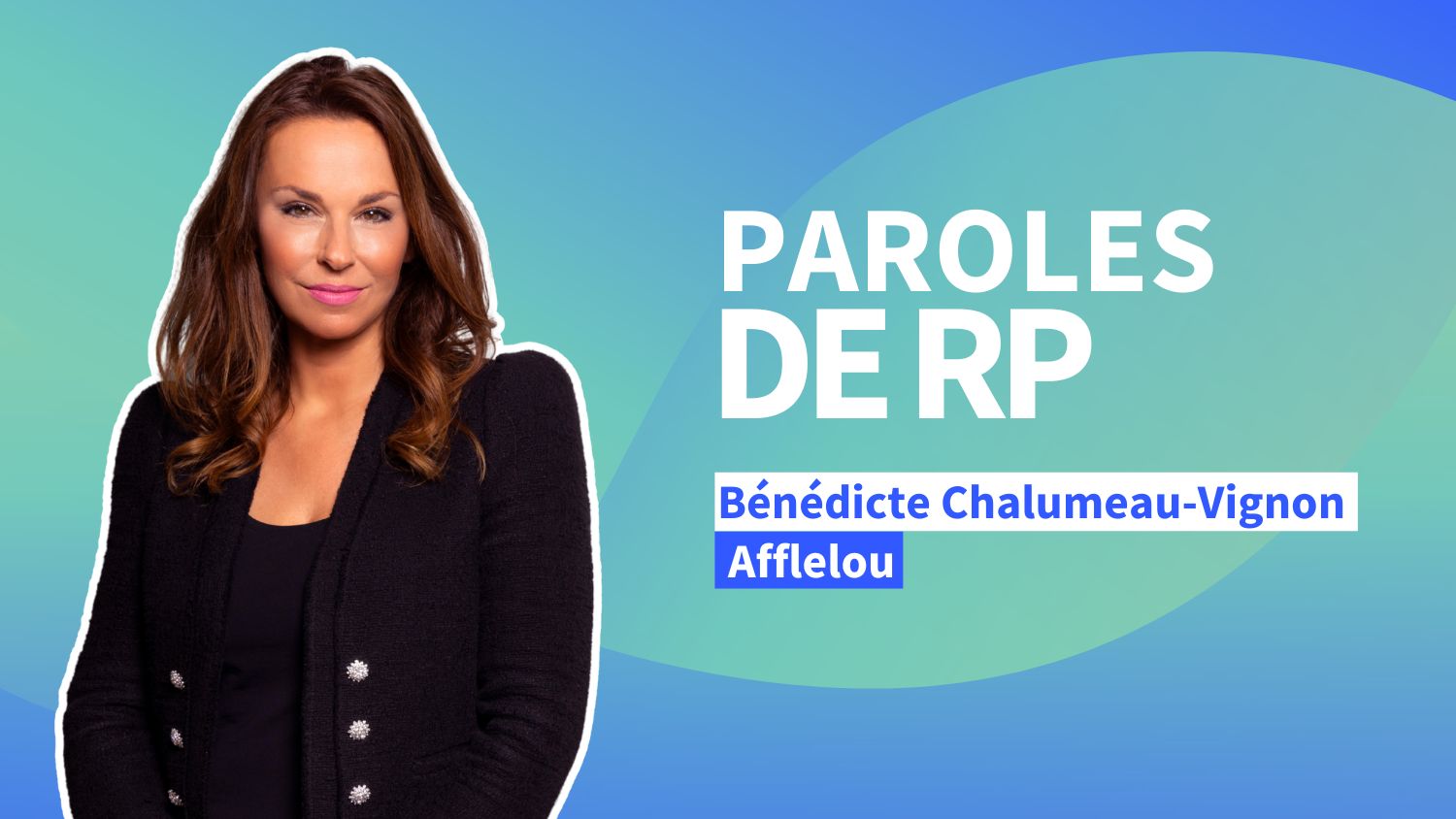
What was your career path before you took over as head of communications and public relations for the AFFLELOU Group ?
I attended a preparatory class for HEC before enrolling in a business school. After graduating, I began my career in London in the marketing department at British Telecom and later at Orange for over two years. Upon returning to France, I worked at several major communications agencies, notably within the Havas Group, for more than fifteen years. It was during this time that I met Mr. Alain Afflelou, whose brand was part of my client portfolio. What was supposed to be a simple relationship between an advertiser and its agency quickly evolved into a genuine professional and personal partnership, based on a shared vision of the brand, creativity, and boldness. A few years later, the group offered me the position of Head of Communications. I have now been leading the group’s communications and media relations for ten years, covering France, Belgium, Luxembourg, Switzerland, and more than 14 countries internationally.
How is the communications department organized within the Afflelou Group ?
Our organization is resolutely agile and fully integrated. My teams responsible for public relations, advertising, media, brand content, creative, social media, events, in-store experiences, and local marketing work together across departments on an ongoing basis, both in France and internationally. Every communication initiative—whether institutional, financial, commercial, or product-related—is conceived as a comprehensive strategy in which each area of expertise plays a complementary role. For example, press relations strengthen the brand’s credibility with the media, brand content fuels our digital ecosystems, events bring the brand to life on the ground, while advertising and media amplify its visibility.
It all starts with a shared brand platform, featuring a clearly defined brand DNA, values, and positioning. We then adapt how these are expressed to the cultural specifics of each market. In Algeria and Morocco, for example, eyewear is perceived as a true fashion accessory and a marker of social status: we therefore place greater emphasis on design, style, and our premium positioning. In Spain, our second-largest market, value for money is a particularly strong factor in purchasing decisions. Our strength lies in maintaining a consistent brand identity while making it culturally relevant in each of our countries.
In your nearly twenty-year career, what are the main changes you've observed in communications and media relations ?
Our industry has undergone a profound transformation. The first major change is the fragmentation of audiences. Just a decade ago, a press release, a few interviews, and a TV campaign were often enough to establish a brand’s positioning. Today, audiences are much more dispersed, and touchpoints have multiplied. Social media, streaming platforms, content creators, and even LinkedIn have become essential channels of influence. A communications strategy can no longer rely on a single approach: it must be omnichannel, consistent, and tailored to the habits of each audience.
The second major disruption is, of course, artificial intelligence. In my view, it’s the greatest revolution since the advent of digital technology, and we’re still only at the beginning. It’s already transforming the way we design campaigns, write content, analyze data, produce images, and optimize the delivery of messages. A brand’s reputation is now also shaped by the responses from generative search engines, which opens up a new strategic frontier for communications professionals.
At the AFFLELOU Group, we’ve always been pioneers; we incorporated artificial intelligence into our practices very early on and produced our first advertising campaigns using these technologies two years ago. But the more AI advances, the more the value of the communications professional lies in what AI cannot do: define a vision, understand emotions, exercise discernment, and make creative choices. AI is a tremendous performance accelerator. Strategy, intuition, and boldness, however, remain deeply human—I am convinced of that.
What metrics do you use to measure the effectiveness of a media relations campaign ?
Public relations is not intended solely to generate visibility. It must strengthen the brand’s reputation and contribute to its performance. We therefore naturally track quantitative metrics, such as the number of media mentions, their potential audience, media coverage, and the number of people exposed to our messages.
But these figures alone are not enough. We also place importance on the quality of the coverage: the credibility of the media outlets reporting the news, the relevance to our target audiences, the tone of the articles, the accuracy of the key messages, and, above all, their ability to generate interest, respect, and trust in our brand and our group.
A public relations strategy is truly effective only when it combines performance with relevance. Visibility is important, but it creates value only when it sustainably strengthens the company’s reputation and supports its business objectives.
How do you build and maintain trusting relationships with journalists and content creators ?
Trust is built over time. For more than fifty years, the AFFLELOU Group has maintained strong relationships with its various stakeholders—journalists, content creators, partners, and customers—thanks to three simple principles: transparency, closeness, and regular communication.
When working with journalists, it is essential to respect their editorial independence. Our role is to provide them with reliable, relevant, and useful information—never to attempt to influence their judgment. This freedom is the foundation of a lasting relationship of trust. With content creators, we also prioritize a long-term approach. Year after year, we work with a network of talented individuals who know the brand, share its values, and build an authentic relationship with us. This loyalty creates genuine consistency in our communications.
Finally, a relationship of trust must be nurtured. Throughout the year, we create numerous opportunities for interaction: one-on-one meetings, press days, previews, brand events, and exclusive tours. In the digital age, nothing can replace the quality of a face-to-face meeting and the richness of a conversation.
Which campaign launched by the AFFLELOU Group makes you the proudest, and why ?
It’s hard to single out just one, since our campaigns serve very different objectives. But if I had to choose one, it would undoubtedly be our eye and hearing health prevention campaign. We don’t just promote our products—we also have a mission to raise awareness and promote prevention. Encouraging screenings, changing behaviors, and making prevention accessible to as many people as possible are all integral parts of our role.
Since June, we’ve been rolling out a 360° campaign aimed at both young people and seniors, combining public relations, social media, local outreach, events, and partnerships. In particular, we’ll be present this summer at several festivals, including the Francofolies, where we’ll offer hearing tests, prevention advice, and hearing protection. It’s still too early to assess the full results, but this campaign perfectly illustrates our ambition: to put our expertise to work for health and to support everyone in seeing better, hearing better, and living better every day.
I’d also like to mention the launch of our latest innovation: MAGIC CONNECT, our new collection of connected glasses. This innovation incorporates Bluetooth technology, allowing users to make phone calls, listen to music, or participate in video conferences—all while remaining a genuine pair of everyday glasses. To support this launch, we developed a two-pronged public relations strategy: a B2C approach, targeting the general-interest, fashion, and lifestyle press to highlight the innovation and user experience, and a B2B approach targeting the specialized optical press to showcase our innovation and development strategy. The campaign generated more than a hundred media mentions in France and internationally.
What qualities are essential today for a good communications and public relations director ?
That’s an interesting question, because the answer changes with the times. The qualities expected of a communications director today are no longer quite the same as they were ten or fifteen years ago. That’s actually what makes this profession so exciting: communications isn’t an exact science; it’s a dynamic field that evolves in step with society, changing habits, and technology.
In my view, a good communications director must first and foremost be curious—curious about societal changes, new behaviors, media, technologies, and consumer expectations. This curiosity fuels innovation and helps keep you one step ahead.
They must also demonstrate boldness, know how to take a stand, champion a vision, and translate a strategy into concrete actions. Added to this are high standards, a keen eye for detail, and true versatility, because communications has become a field at the intersection of marketing, digital, reputation management, influence, public affairs, event management, and crisis communications.
Finally, it’s essential to stay constantly informed, particularly when it comes to artificial intelligence. I personally experiment with new tools every day to understand their strengths and limitations and to integrate them thoughtfully into our business operations. This curiosity also involves keeping a daily eye on the media, LinkedIn, Instagram, and TikTok, which have become true barometers of trends and societal changes.
Ultimately, I believe that tools will always evolve. However, the ability to have a vision, make decisions, build trust, and rally people around a story will remain the true role of a communications director.
What advice would you give to a young professional who wants to pursue a career in public relations ?
Be curious, bold, and discerning. Dare to propose new ideas, stay constantly on the lookout, and never forget that, in public relations, trust is built day by day.
See also :
Lola Beauvillain de Montreuil (EDF) : « Le meilleur article est parfois celui qui ne sort pas »
Julie Dobiecki (HEC) : « Dans le domaine académique, les sujets sont souvent complexes. On doit savoir vulgariser les termes techniques dans nos CP »
IA et CP standardisés : comment déjouer le piège de l'uniformité ?
Communiqué de presse ou dossier de presse : quelles différences et lequel choisir ?