Could you start by introducing yourself and telling us about your work on the programme *Invitation au voyage* (Arte) ?
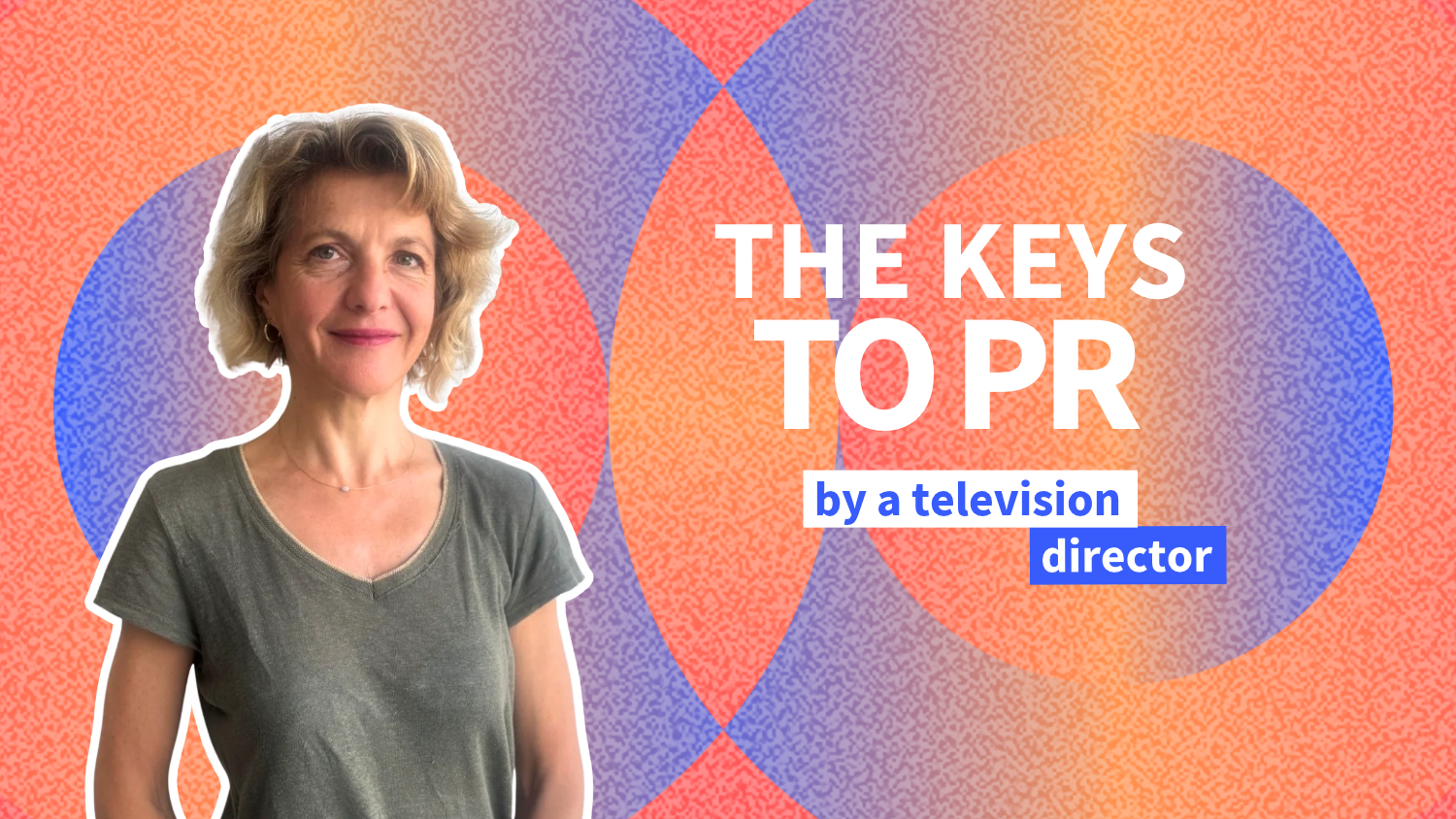
I am Olivia Buffi, one of the editors-in-chief of Invitation au voyage, broadcast daily on Arte. There are four of us journalist-editors-in-chief in charge of the so-called “long” segments, namely the Inspiration and Heritage segments, in a 14-minute format. In all, each of us produces 80 segments a year. Our job is to choose the director and to support every stage of production, from writing to editing and even post-production. It is a very demanding format, which is akin to reportage, since it requires lively footage, but also to documentary, with a very high degree of preparation and writing.
We are involved from the choice of subjects onward, in coordination with production, its parameters and costs, but also in line with Arte’s requests. We then follow any changes made at the different stages of the production chain. There is also fact-checking work, carried out with journalists. The challenge is to meet the expectations of our audience, which we want to be very diverse and demanding.
What is the timeframe between the moment you choose a subject and the moment it is broadcast ?
The timeframe is six months at minimum. From last June to next December, for example, we are preparing the shoots and edits of the segments that will be broadcast between January and June 2027.
How do you choose your subjects? What criteria must a subject meet to become a documentary ?
We have two segments: Inspiration and Heritage. The subjects are always linked to a place, a destination, since the show is an invitation to travel. But it is not tourism: the title refers to Baudelaire, and to travel as the discovery of a territory, at once geographical, historical and human.
The goal is to try to discover a place by understanding the culture, mentality and history of its inhabitants. To do so, we can approach it through the lens of inspiration: that is, by presenting an artist, writer, filmmaker, photographer, poet, singer, musician, visual artist, painter or architect who was inspired by the place for a given work. We can also present it through our Heritage segment. In that case, we focus on an element of today’s society or culture that is connected to the given territory, in order to present the human epic that leads to this state of culture, mentality or way of life.
I draw inspiration from literature, the press and photography. I go to exhibitions and live performances, I go to the theater and the cinema: all of these feed my ideas. We sometimes find a few elements in travel guides, but that remains marginal.
The show will soon celebrate its 10th anniversary: our challenge is to renew our subjects. For a few years now, we have been looking for more “pop” subjects, in other words more contemporary ones drawn from popular culture. For example, we covered women’s education in Kerala, starting from the fact that 98% of women are literate in that Indian state, which is not the case in the rest of the country.
I am therefore in contact with the press offices of exhibitions and festivals such as Avignon and Arles in order to attend press visits, as well as with those of publishers.
Precisely, what role do press relations play in your daily work? To what extent can a press release be useful to you?
I am flooded with emails from communicators, and many are out of step with my subjects. For example, I receive advertisements for luxury hotels or for a thalassotherapy stay. I hang up right away because it does not interest me at all. There are also a huge number of press releases about restaurants. I am always a bit reluctant when I feel that PR people are looking for free advertising.
Some press relations services are useful to us, such as those of tourist offices that organize meetings. For example, I took part in an event organized by the Tuscany region, which gave me some possible leads for subjects.
But overall, I feel that communicators do not really understand our needs.
To what extent do you, conversely, sometimes need to approach press offices? In that case, what are your needs?
I contact them mainly to receive a novel on a given subject, for example. But receiving a work does not mean that we will dedicate a segment to it. Otherwise, although this is more the directors’ job, we get in touch with press relations people to contact an artist.
What mistakes should be avoided?
Very often, I receive emails from press offices titled: “We have a story for you.” But it is not up to communicators to decide on our segments. And 90% of the time, I feel like inviting them to watch the show at least once before sending me any communication. I have the impression that they send things out on an assembly line. The result: I delete the emails right away and unsubscribe without trying to find out more.
I receive dozens of press releases every day. So I spend a considerable amount of time deleting them or unsubscribing, hoping not to miss something interesting.
I sometimes feel that communicators stop at the title of the show at face value, and not at its cultural dimension. For example, in my inbox today, I find a publisher telling me about a Norwegian philosopher in Paris, and also a reflection on the return of analog photography on social media with the 2026 photo and video barometer. This information may interest me. On the other hand, Corolle unveiling its Christmas collection is of no use to me. I also received “the most romantic French city for a date according to your zodiac sign”: needless to say, it has nothing to do with my subjects.
In short, when I see corporate communication or advertising, I am not interested. Conversely, I am interested in information about cultural events or facts.
What do you think of press trip ?
We do not have time to take part in them. I had the chance to go on one because it happened, miraculously, during a week when I had no editing. It was in Kazakhstan. Since I was sending a crew there, I found it worthwhile. But it is extremely rare for us to take part.
What are the conditions for good press relations, in your view?
I need communicators to be responsive. For example, when we are trying to get in touch with an agent or an artist, we appreciate quick replies.A lire aussi :